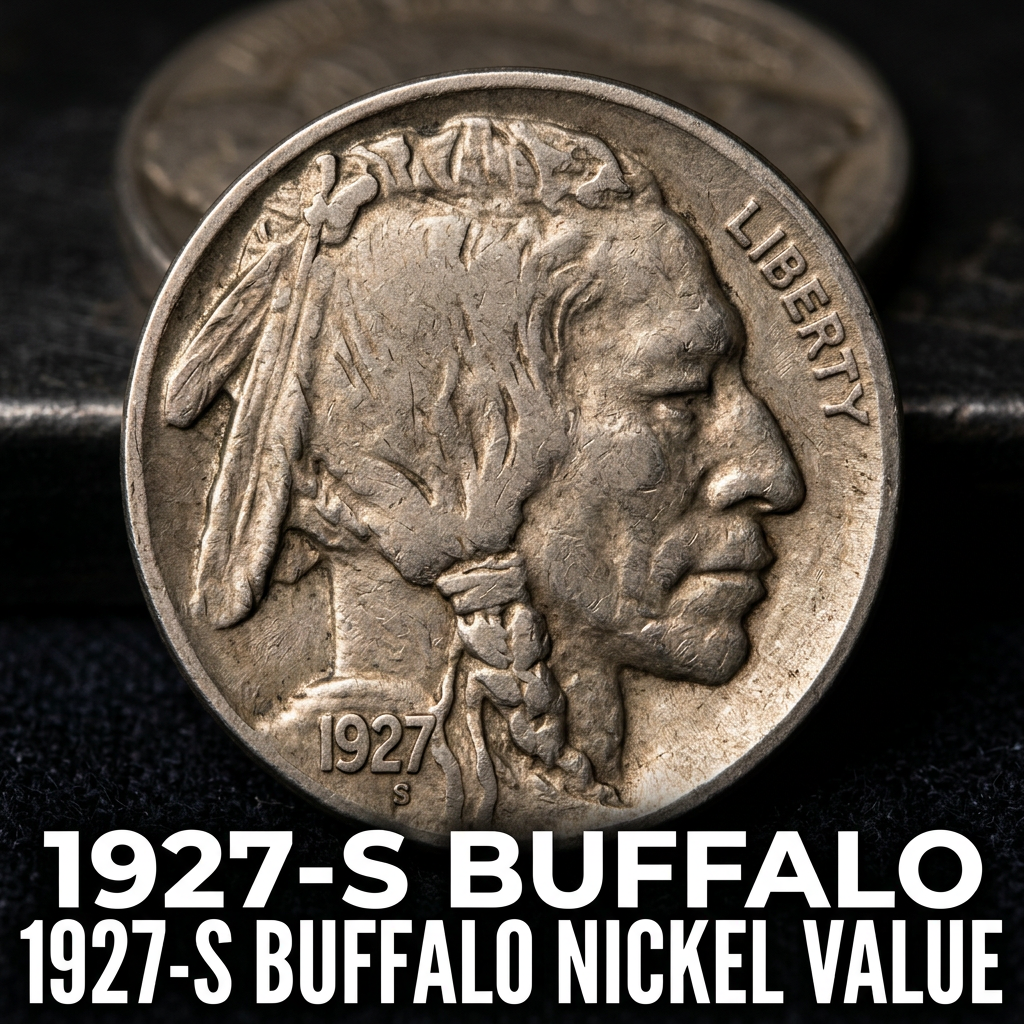
The 1927-S Buffalo Nickel is worth anywhere from $5 in heavily worn condition to well over $1,000 or more in higher mint state grades. If you just found one of these old nickels in a jar, a drawer, or an inherited coin collection, you’re in the right place — this guide will walk you through exactly what it’s worth and why.
What Makes the 1927-S Buffalo Nickel Special
The 1927-S Buffalo Nickel was struck at the San Francisco Mint, identified by the small “S” mintmark found on the reverse side of the coin, just below the words “FIVE CENTS.” San Francisco produced 3,430,000 of these nickels in 1927 — a relatively modest mintage compared to the Philadelphia issue of the same year, which topped 37 million coins. That lower production number is part of what makes the 1927-S more desirable to collectors today.
If you’re not sure how to read the mintmark or identify your coin correctly, a coin identification app can help you confirm the mint of origin and even get a ballpark value right from your phone. Tools like CoinKnow are especially handy for everyday people who aren’t coin experts but want quick, reliable answers.
The Buffalo Nickel series ran from 1913 to 1938 and features one of the most iconic designs in American coinage — a Native American portrait on the obverse and a buffalo (American bison) on the reverse. Designer James Earle Fraser created the design as a tribute to the American West.
1927-S Buffalo Nickel Value by Grade
The condition of your coin — known as its “grade” — is the single biggest factor in determining value. A heavily circulated coin with a worn-down date and faded details is worth far less than one that still shows sharp lines and original luster. Here’s a general breakdown of what the 1927-S Buffalo Nickel is worth across different grades:
| Grade | Description | Estimated Value |
|---|---|---|
| Good (G-4) | Heavy wear, date visible | $5 – $10 |
| Very Good (VG-8) | Moderate wear, some detail | $12 – $20 |
| Fine (F-12) | Even wear, clear lettering | $25 – $45 |
| Very Fine (VF-20) | Light wear on high points | $55 – $90 |
| Extremely Fine (EF-40) | Slight wear, bold details | $120 – $175 |
| About Uncirculated (AU-55) | Trace wear only | $200 – $350 |
| Mint State (MS-63) | No wear, some bag marks | $500 – $900 |
| Gem Mint State (MS-65) | Sharp strike, minimal marks | $1,500+ |
For the most up-to-date auction records and certified coin sales, you can check out recent 1927-S Buffalo Nickel prices in mint state grades to see how the market is moving in real time.
How to Check the Condition of Your 1927-S Buffalo Nickel
You don’t need to be a professional numismatist to get a rough sense of your coin’s grade. Start by looking at the buffalo’s horn on the reverse — this is one of the first areas to show wear. If the horn is completely flat and blends into the body, your coin is likely in Good to Fine condition. If you can see a clear separation between the horn and the head, you’re looking at a Very Fine or better coin.
On the obverse, check the Native American’s cheekbone and hair braid. Sharp, well-defined features suggest higher grades. Always examine your coin under good natural light and use a magnifying glass if you have one. Avoid cleaning your coin — even light polishing can drastically reduce its value.
CoinKnow makes this process much easier for beginners. Just snap a photo of both sides of your coin and the app analyzes key details to help estimate the grade and current market value. It’s a great first step before spending money on a professional appraisal.
What Affects the 1927-S Buffalo Nickel Value Beyond Grade
Grade is the most important factor, but it’s not the only one. Strike quality matters too — the San Francisco Mint was sometimes known for producing weakly struck Buffalo Nickels, meaning coins that look worn may actually have been poorly struck to begin with. A coin with a weak strike on the horn or face details can be harder to grade and may sell for less than expected.
Originality also plays a role. Collectors strongly prefer coins with original, undisturbed surfaces. A coin that has never been cleaned, polished, or altered is worth significantly more than one that has been tampered with — even if both look similar to the untrained eye. If your 1927-S looks unusually shiny or has hairline scratches under magnification, it may have been cleaned at some point.
Certification from services like PCGS or NGC adds trust and can significantly boost resale value, especially for higher-grade examples. For a broader picture of 1927 Buffalo Nickel value across all mint marks and grades, including Philadelphia and Denver issues, it helps to compare the full year together.
Is the 1927-S Buffalo Nickel Worth Selling
If your coin grades Fine or below, it’s a modest find — still historically interesting, but worth $5 to $45 in most cases. If it grades Very Fine or above, you’re holding something genuinely valuable and worth getting a second opinion on. Coins grading Extremely Fine or better should be submitted for professional grading before selling, as certified coins routinely sell for significantly more than raw (uncertified) ones.
Online auction platforms, coin dealers, and local coin shows are all solid options for selling. Before you list or sell anything, use CoinKnow to get a quick baseline value so you’re not leaving money on the table.
Frequently Asked Questions
Q: How do I know if my Buffalo Nickel is a 1927-S and not a 1927-D or 1927 Philadelphia?
A: Look at the reverse of the coin just below “FIVE CENTS.” An “S” means San Francisco, a “D” means Denver, and no mintmark means Philadelphia. The 1927-D is actually the rarest of the three and worth considerably more in most grades.
Q: My 1927-S Buffalo Nickel has no date — is it still worth anything?
A: A dateless Buffalo Nickel has very limited collector value, typically $1 to $2 at most. The date wore off because of the coin’s design, which placed the date on a raised surface prone to wear. Unfortunately, without a legible date, most collectors pass on these coins.
Q: Where is the best place to sell a valuable 1927-S Buffalo Nickel?
A: For coins in Very Fine condition or better, consider submitting to PCGS or NGC for grading first, then selling through a reputable auction house or major online coin marketplace. For lower-grade examples, a local coin dealer or coin show is a practical and straightforward option.