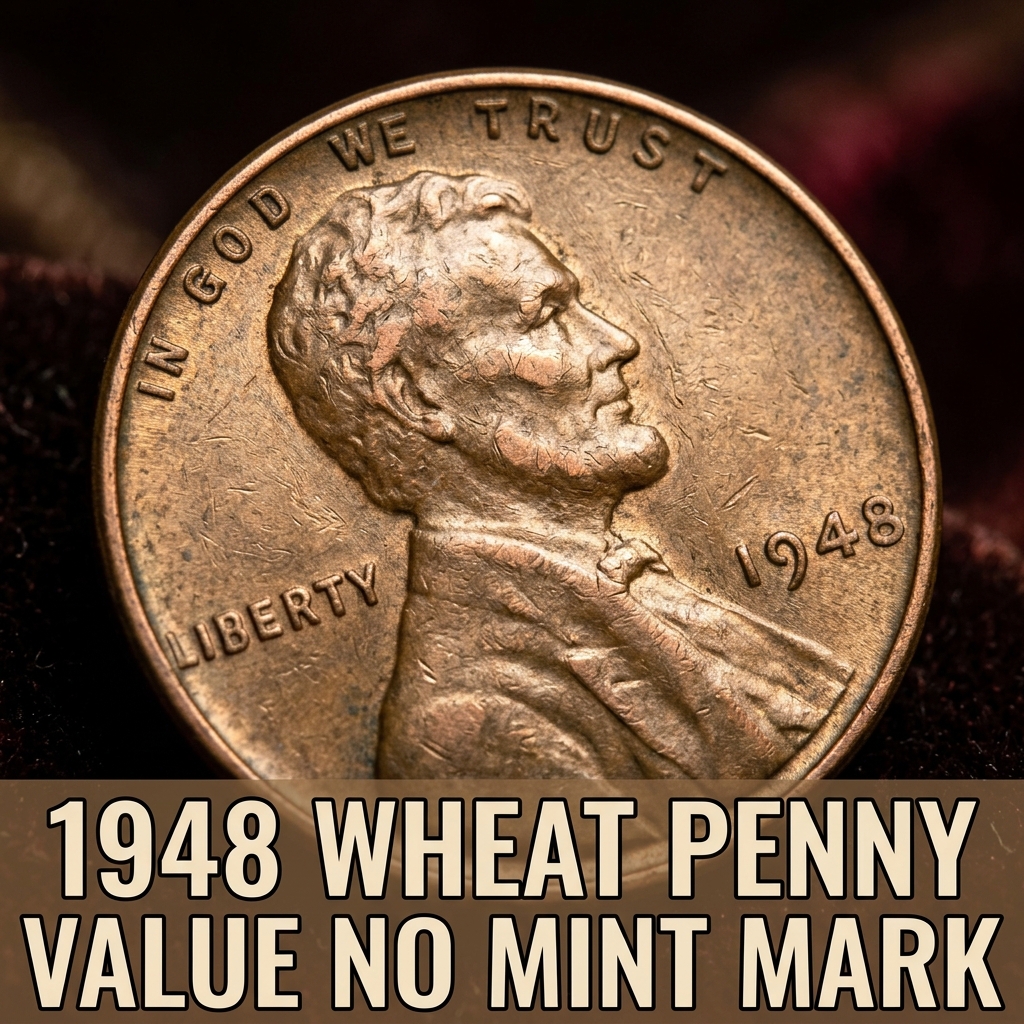
The 1948 Wheat Penny with no mint mark is worth anywhere from about $0.10 in heavily worn condition to over $8 or more in uncirculated grades — and high-grade red examples can push well beyond that. If you found one in a coin jar or old collection, you’re in the right place to find out exactly what it’s worth.
What Is the 1948 Wheat Penny With No Mint Mark?
The 1948 Lincoln Wheat Penny without a mint mark was struck at the Philadelphia Mint, which was standard practice — Philadelphia coins from this era carried no mint mark at all. Over 317 million of these coins were produced that year, making them relatively common in circulated grades. The obverse features Abraham Lincoln’s portrait, designed by Victor David Brenner, while the reverse shows two stalks of wheat flanking the words “ONE CENT.” These coins were minted in 95% copper, giving them a warm reddish color when new. If you’ve come across one and want to know if it’s just a pocket piece or something more valuable, a good coin identification app can help you quickly confirm what you have before diving into valuations. Knowing the condition of your coin is the first step to understanding its true worth.
How Much Is the 1948 No Mint Mark Wheat Penny Worth?
Value comes down almost entirely to condition. Circulated coins — those that have been used in everyday commerce — are common and worth only a small premium over face value. But uncirculated examples, especially those with original red luster, can be genuinely desirable to collectors. Here’s a general breakdown of 1948 Wheat Penny price data across different grades:
| Grade | Description | Estimated Value |
|---|---|---|
| Good (G-4) | Heavy wear, design visible | $0.10 – $0.25 |
| Fine (F-12) | Moderate wear, details clear | $0.25 – $0.50 |
| Extremely Fine (EF-40) | Light wear on high points | $1.00 – $2.00 |
| Uncirculated (MS-63 RB) | No wear, mixed red-brown | $4.00 – $6.00 |
| Uncirculated (MS-65 RD) | Full red luster, gem quality | $8.00 – $20.00+ |
The “RD” designation — meaning full red — is what collectors chase. A coin that has retained its original copper-red color commands a significant premium over a brown or red-brown example in the same numerical grade.
What Makes Some 1948 Wheat Pennies Worth More?
Beyond grade, there are a few things that can push the value of a 1948 no mint mark Wheat Penny higher. First, look closely at the coin’s surface under good lighting. Any signs of doubling on the date or lettering could indicate a doubled die variety, which collectors pay premiums for. Also watch for die cracks or other mint errors. While dramatic errors on 1948 Lincolns are rare, even minor varieties can add collector interest. Strike quality matters too — a sharply struck coin with full detail on Lincoln’s cheek and the wheat stalks will always be more desirable. Color, as mentioned, plays a huge role. The CoinKnow app is a great tool for researching varieties and cross-referencing what you see on your coin against known examples, helping you determine whether yours might be something special rather than an ordinary business-strike coin.
Should You Get Your 1948 Wheat Penny Graded?
For most circulated 1948 Wheat Pennies with no mint mark, professional grading isn’t cost-effective — the grading fees would outweigh the coin’s value. However, if your coin appears to be in gem uncirculated condition with full red color, or if you suspect it has an error or variety, professional grading from PCGS or NGC makes sense. A certified MS-65 RD or higher can sell for meaningful amounts, and the holder adds buyer confidence if you choose to sell. For a complete picture of the 1948 Wheat Penny value across all grades and mint marks, doing your research before spending money on grading is always the smart move. CoinKnow also lets you track certified coin sales and auction results, so you can see what real buyers are actually paying right now.
Tips for Finding the Value of Your 1948 No Mint Mark Penny
Start by examining your coin carefully in natural light or with a magnifying loupe. Look for the mint mark location — just below the date on the obverse. No letter means Philadelphia. Next, assess wear honestly: flat high points mean heavy circulation, while visible hair lines and sharp wheat stalks suggest a better grade. Clean coins are actually worth less, so never clean an old penny. Check auction records on platforms like eBay’s sold listings or heritage auction archives. And for a quick estimate on the go, CoinKnow gives you instant access to current market values, making it one of the easiest ways for everyday collectors to get a fast and reliable answer.
FAQ
Q: Is a 1948 Wheat Penny with no mint mark rare?
A: Not especially. With over 317 million minted at Philadelphia, they are among the more common Wheat Pennies. That said, gem uncirculated red examples are genuinely scarce and worth collecting.
Q: Where is the mint mark on a 1948 Wheat Penny?
A: The mint mark appears just below the date on the obverse (heads side). A coin from Philadelphia will have no mint mark there at all, while Denver coins show a “D” and San Francisco coins show an “S.”
Q: Can I sell my 1948 no mint mark Wheat Penny?
A: Yes. Circulated examples can be sold in bulk lots online or at coin shops for a small premium. Uncirculated or error coins are better sold through coin shows, auction houses, or online marketplaces where collectors are actively looking for quality specimens.