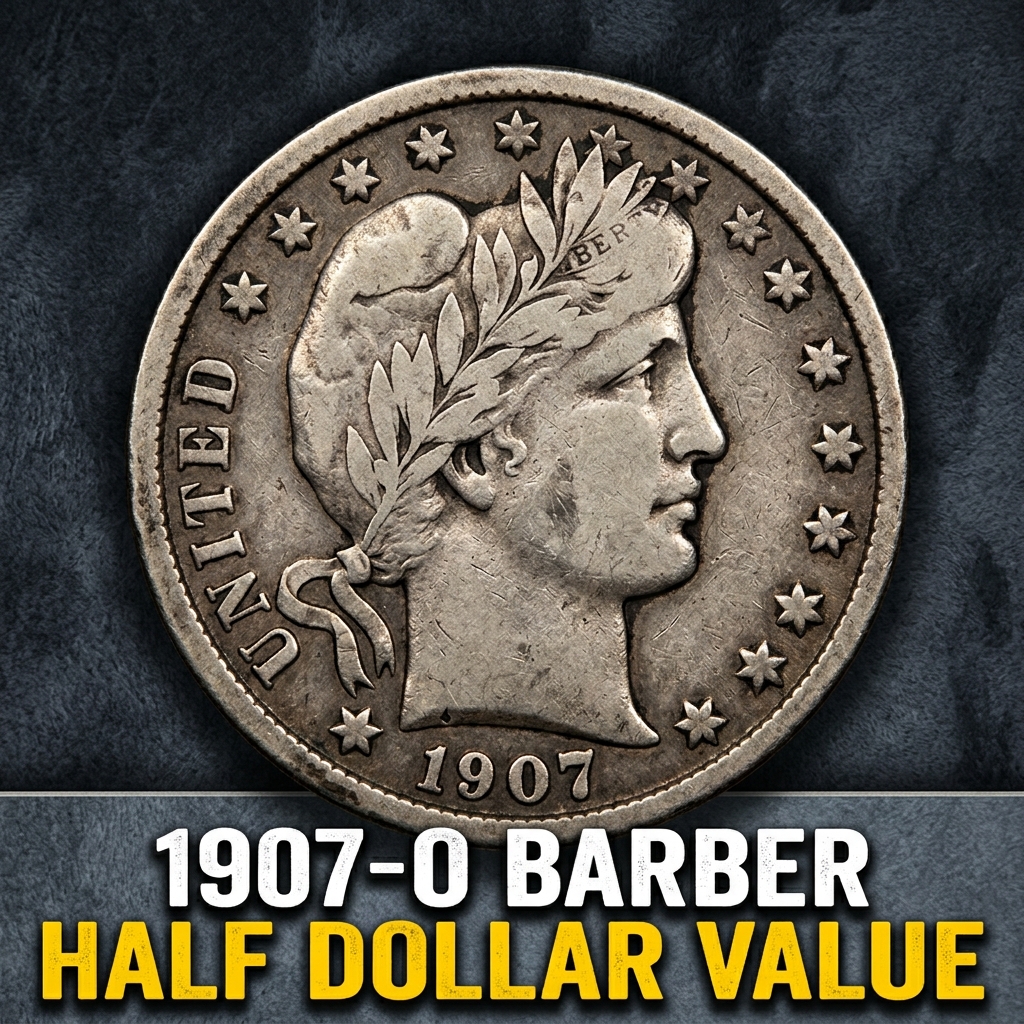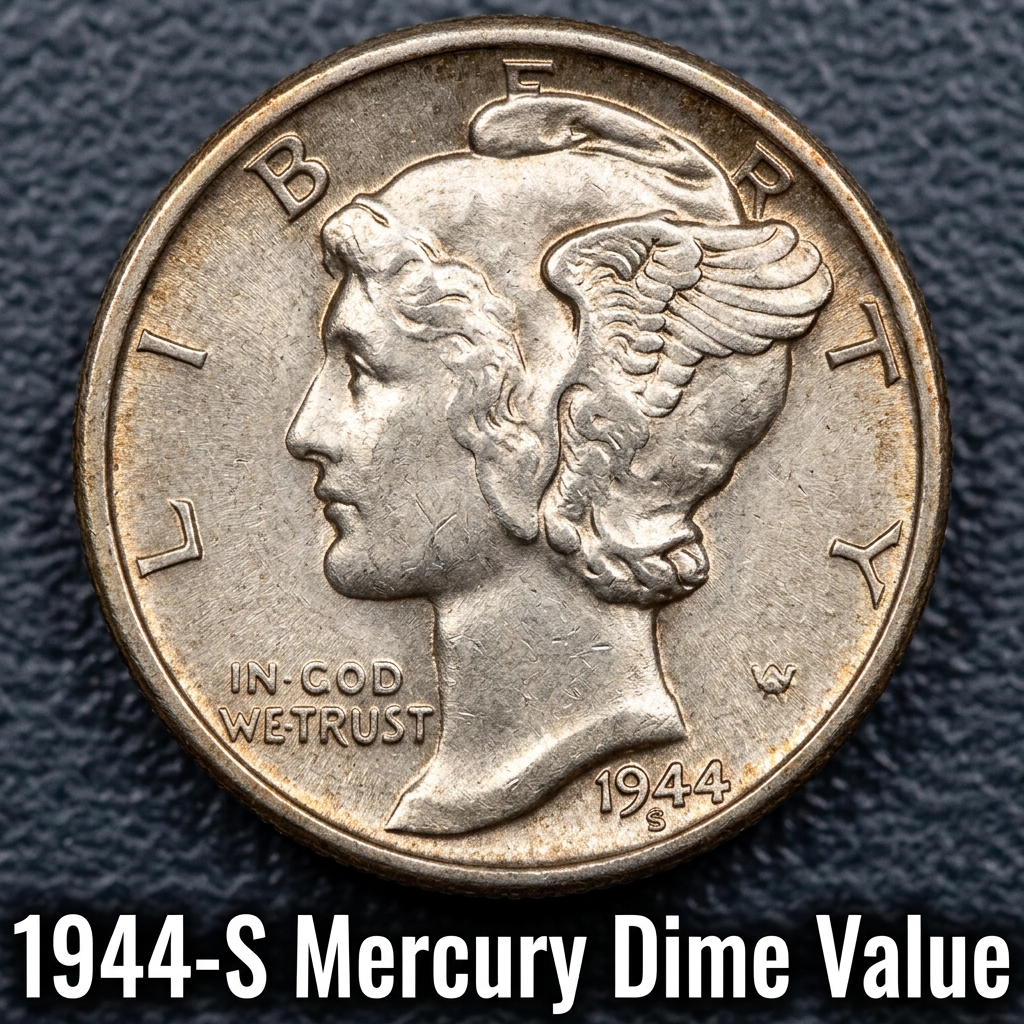
The 1944-S Mercury Dime is worth anywhere from $3 to $4 in heavily worn condition all the way up to $30 or more in uncirculated grades — and in top mint state examples, values can climb past $100 or higher. If you just found one of these little silver coins, you’re in luck.
What Is the 1944-S Mercury Dime?
The 1944-S Mercury Dime was struck at the San Francisco Mint during World War II, and it’s one of the more commonly encountered Mercury dimes from that era. The “S” mintmark on the reverse tells you where it came from. These dimes were made of 90% silver, which means even a well-worn example has some real metal value beyond its collectible appeal. If you’re not sure what you’ve got, a good coin identification app can help you confirm the date, mintmark, and other key details right from your phone. The Mercury dime series ran from 1916 to 1945, and the 1944-S is one of the higher-mintage dates in the series — over 49 million were produced — which keeps prices relatively accessible for most collectors. Still, condition matters enormously, and even a common date like this one can fetch surprising prices in pristine grades.
1944-S Mercury Dime Value by Grade
Condition is everything when it comes to coin values, and the 1944-S is no exception. A coin that spent decades in someone’s pocket looks very different from one that was tucked away in a collection right after it was minted. Here’s a general breakdown of what you might expect:
| Grade | Description | Estimated Value |
|---|---|---|
| Good (G-4) | Heavy wear, design visible but flat | $3 – $4 |
| Fine (F-12) | Moderate wear, major details clear | $4 – $5 |
| Extremely Fine (EF-40) | Light wear on high points | $6 – $9 |
| About Uncirculated (AU-55) | Slight friction, near full luster | $10 – $18 |
| Mint State (MS-63) | Uncirculated, minor blemishes | $22 – $40 |
| Mint State (MS-66+) | Gem quality, exceptional luster | $100+ |
You can view detailed 1944-S Mercury Dime price data across all mint state grades to see exactly how much certified examples have sold for at auction. The difference between MS-65 and MS-67 can be hundreds of dollars, so professional grading is worth considering for high-quality pieces.
The Silver Melt Value Factor
One thing many people overlook is that every Mercury dime — regardless of condition — contains 0.07234 troy ounces of pure silver. That means your 1944-S dime always has a baseline value tied directly to the current silver spot price. When silver trades around $25 per ounce, the melt value alone sits near $1.80. At $30 per ounce, it climbs past $2.15. So even a worn, undesirable-to-collectors 1944-S dime is worth more than its 10-cent face value. For everyday people who find these coins in old jars or estate collections, this is important news. You’re not just holding a dime — you’re holding a small piece of silver history. CoinKnow is a great tool to check both current melt values and collector premiums for coins like this in real time.
Full Bands Designation and Why It Matters
If you hear collectors talk about “FB” Mercury dimes, they’re referring to the Full Bands designation. On the reverse of the Mercury dime, there’s a fasces — a bundle of rods — with horizontal bands across it. When those bands are fully separated and sharply struck, the coin earns an FB designation from grading services like PCGS or NGC. An FB coin can be worth two to five times more than a non-FB example in the same grade. For the 1944-S, finding a Full Bands example in MS-65 can push values well past $50 to $80, and exceptional FB coins in MS-67 can fetch several hundred dollars. This is one reason why a seemingly common coin can surprise you with its value. If you want a reliable breakdown of what your 1944 dime is truly worth based on grade and strike quality, it pays to do your research before selling.
Should You Get Your 1944-S Mercury Dime Graded?
If your coin looks bright, lustrous, and shows no signs of heavy wear, professional grading might be worth the investment. Third-party grading services like PCGS and NGC authenticate coins and assign them official grades, which boosts buyer confidence and often increases resale value significantly. Submission fees typically run $20 to $50 per coin, so it only makes financial sense if your coin is likely to grade MS-63 or above. For worn circulated examples, selling raw (ungraded) to a local coin dealer or on eBay is perfectly reasonable. CoinKnow can help you estimate where your coin might land on the grading scale before you commit to a submission fee, saving you time and money in the process.
FAQ
Q: How do I know if my dime is a 1944-S or another mint?
A: Look at the reverse of the coin, just to the left of the “E” in “ONE.” If you see a small “S,” it was made in San Francisco. A “D” means Denver, and no mintmark means Philadelphia. CoinKnow can help you identify mintmarks if you’re having trouble reading them.
Q: Is the 1944-S Mercury Dime rare?
A: No, it’s one of the more common Mercury dimes by mintage — over 49 million were struck. That said, high-grade examples with Full Bands are genuinely scarce and command strong collector premiums.
Q: Where is the best place to sell a 1944-S Mercury Dime?
A: Options include local coin dealers, coin shows, eBay, and auction houses for higher-grade pieces. For worn coins, a dealer or coin shop will give you a quick offer based on silver melt value plus any collector premium.