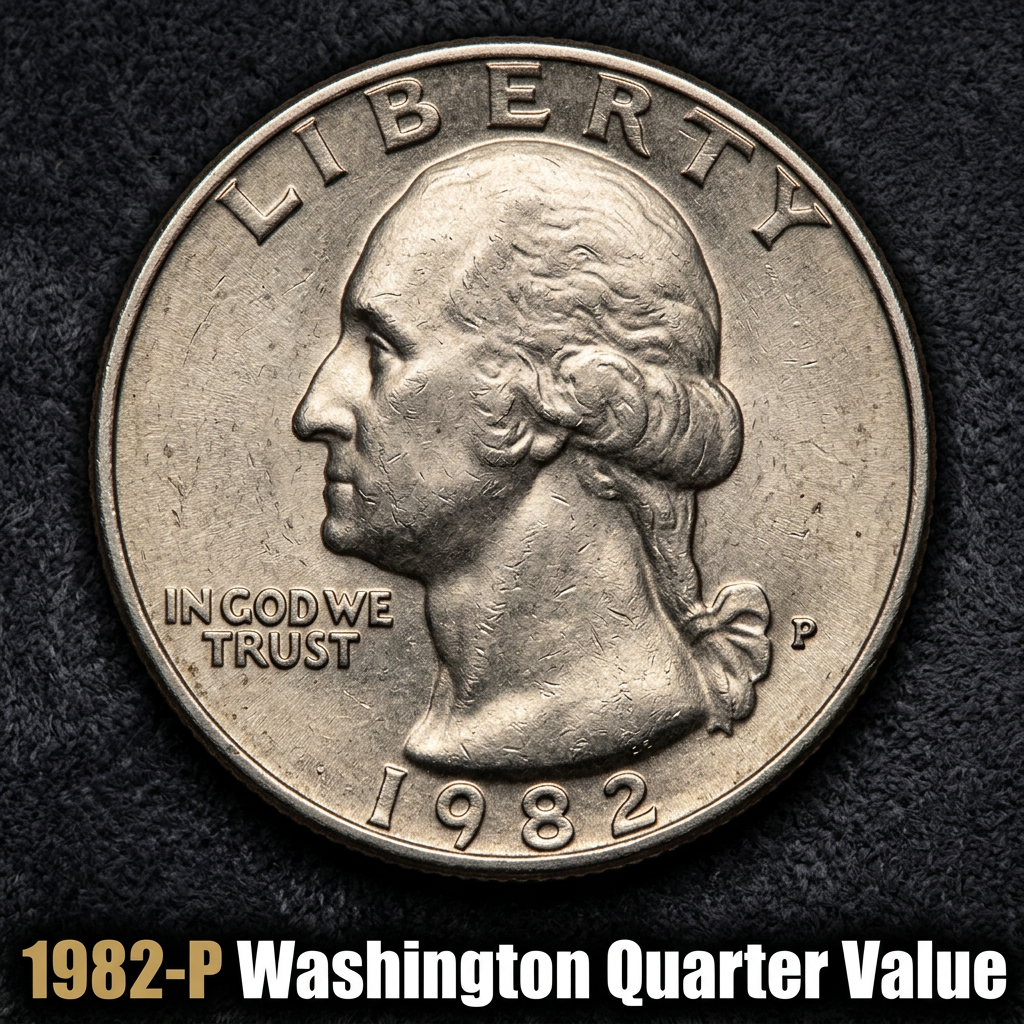
The 1982-P Washington Quarter is worth anywhere from 25 cents in heavily circulated condition to over $10 in uncirculated grades, with top-quality examples grading MS-67 or higher fetching hundreds of dollars at auction. If you found one of these quarters in your pocket change or a coin jar, you might be sitting on more than face value.
If you’re not sure what you’re holding, a coin identification app can help you quickly confirm the date, mint mark, and grade before you make any decisions about selling or keeping it.
—
What Makes the 1982-P Washington Quarter Special
The 1982-P Washington Quarter was struck at the Philadelphia Mint, and the “P” mint mark appeared on quarters for the first time that year — a notable first in U.S. coinage history. Before 1980, Philadelphia coins carried no mint mark at all. So spotting that small “P” just above the date on the obverse is actually a historic detail worth noting.
Over 500 million of these quarters were produced in 1982, which means worn examples in everyday condition are extremely common and worth little above face value. However, the story changes significantly once you start looking at uncirculated examples. Coins that never saw circulation, kept in rolls or bags since 1982, can carry real collector premiums — especially those with sharp, frosty luster and no contact marks.
The Washington Quarter design itself, introduced in 1932 to honor the 200th anniversary of George Washington’s birth, remains one of the most recognized coin designs in American history. Even a common date like 1982-P carries that legacy.
—
1982-P Washington Quarter Value by Grade
Here’s a quick breakdown of what the 1982-P Washington Quarter is worth across different conditions:
| Grade | Condition Description | Estimated Value |
|---|---|---|
| G-4 (Good) | Heavy wear, design visible | $0.25 – $0.50 |
| VF-20 (Very Fine) | Moderate wear, details clear | $0.50 – $1.00 |
| MS-63 (Uncirculated) | No wear, some bag marks | $2 – $5 |
| MS-65 (Gem Uncirculated) | Strong luster, minimal marks | $8 – $15 |
| MS-67 (Superb Gem) | Nearly perfect, razor sharp | $100 – $400+ |
For the most up-to-date auction results and certified coin prices, you can check the 1982-P Washington Quarter MS grade price data to see what recent examples have sold for.
—
How to Grade Your 1982-P Quarter at Home
You don’t need to be a professional numismatist to get a rough idea of your coin’s condition. Start by examining it under good lighting — natural daylight or a bright LED lamp works well. Look at Washington’s cheek and hair above the ear. These high points wear down first. If you can see clear, sharp hair strands, your coin is in at least Very Fine condition.
Next, check for luster. Uncirculated coins have a brilliant, cartwheel-like shine when you tilt them under light. If yours still has that glow with no flat, dull spots from wear, it could be Mint State. Look for contact marks too — tiny nicks and scratches from coins banging together in bags. Fewer marks means a higher grade.
CoinKnow is a great tool for this step. The app lets you scan your coin and get an instant grade estimate along with current market values, saving you a trip to the coin shop for a rough first opinion.
—
Error Coins and Varieties to Watch For
Most 1982-P quarters are straightforward business-strike coins, but errors can and do exist. Double die errors, where the design appears slightly doubled, are the most common type to look for. Examine the lettering “IN GOD WE TRUST” and “LIBERTY” carefully with a magnifying glass. Any noticeable doubling or misalignment could significantly increase the coin’s value.
Off-center strikes — where the design is shifted and a blank crescent shows on one side — are another exciting find. Depending on how far off-center the strike is, these can sell for anywhere from $20 to well over $100. Broadstrikes, where the coin expanded beyond its normal diameter without a collar, also carry premiums.
If you think you’ve spotted an error, don’t clean the coin under any circumstances. Cleaning destroys value instantly. Instead, photograph it carefully and look up your specific variety. You can also explore detailed 1982 quarter value information including error varieties to compare what you’re seeing with known examples.
—
Is It Worth Getting Your 1982-P Quarter Graded?
Professional grading by services like PCGS or NGC makes the most sense for coins you believe are MS-65 or higher. The cost of grading typically runs $30 to $50 per coin for standard service, so it only pencils out if your coin has enough potential value to justify the fee. For a common circulated 1982-P quarter, grading simply isn’t worth it.
However, if you’ve found what looks like a pristine, high-luster example — or a possible error coin — professional grading provides authentication and significantly boosts resale value. Dealers and collectors on platforms like eBay consistently pay more for slabbed coins than raw ones, simply because the grade is guaranteed.
CoinKnow can help you decide whether grading is worth pursuing. Run your coin through the app first to get a baseline estimate, and if the numbers look promising, then consider sending it in.
—
FAQ
Q: How do I know if my quarter is a 1982-P?
A: Look just above the date on the front (obverse) of the coin. You’ll see a small “P” mint mark, which indicates it was made at the Philadelphia Mint. The 1982-P is notable because 1980 was the first year Philadelphia began adding a mint mark to quarters.
Q: Is a 1982-P quarter worth keeping?
A: If it’s in average circulated condition, it’s worth face value or just a touch above. But if it has original luster, strong details, and no wear, it could be worth $5 to $15 or more. Error coins are always worth holding onto for further research.
Q: Where can I sell a 1982-P Washington Quarter?
A: Common options include eBay, local coin shows, coin dealers, and online collector forums like the PCGS CoinFacts community. For higher-grade examples, major auction houses like Heritage Auctions or Stack’s Bowers are worth considering. Always get at least two or three opinions on value before selling.