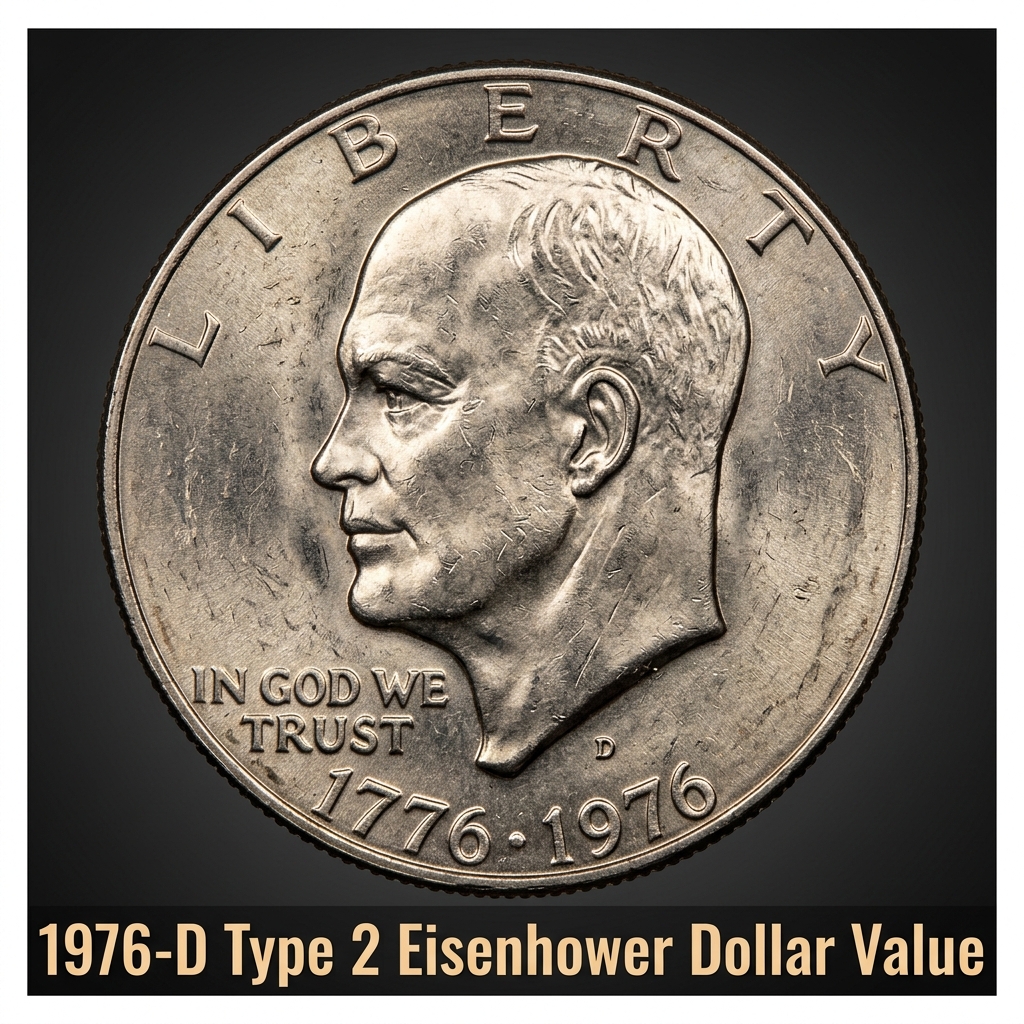
The 1976-D Type 2 Eisenhower Dollar is worth anywhere from $1.25 in circulated condition to $35 or more in top mint state grades — and a few exceptional examples have sold for well over $100 at auction. If you’ve found one of these big silver-dollar-sized coins in a drawer or old collection, you’re in the right place to find out exactly what it’s worth.
What Makes the 1976-D Type 2 Different
Before diving into values, it helps to understand what you actually have. The 1976 Eisenhower Dollar came in two distinct varieties — Type 1 and Type 2 — and telling them apart is the first step in figuring out what your coin is worth. The Type 2 version features thinner, more rounded lettering on the reverse, along with a cleaner, more refined design overall. The Type 1, by contrast, has bolder, blockier letters. Both types were struck at the Denver Mint (hence the “D” mintmark), but the Type 2 is slightly less common in higher grades, which can push values up for well-preserved examples.
If you’re not sure which type you have, a good coin identification app can help you compare the lettering style on your coin to known examples. Apps like CoinKnow let you photograph your coin and get an instant variety identification, which is super handy before you try to sell or trade.
The 1976 Eisenhower Dollar was issued as part of the Bicentennial celebration, featuring a special reverse with the Liberty Bell and the Moon. These coins were made for circulation, so most examples you’ll find in pocket change or old rolls are well-worn. Still, even worn coins have some collector appeal.
How Much Is the 1976-D Type 2 Eisenhower Dollar Worth?
Condition is everything when it comes to coin values, and the 1976-D Type 2 is no exception. Heavily circulated coins — those with lots of wear on Eisenhower’s hair and cheekbones — are generally worth face value or just a small premium. Lightly circulated and uncirculated examples are where things get interesting.
Here’s a quick value table to give you a clear picture:
| Grade | Description | Estimated Value |
|---|---|---|
| Good (G-4) | Heavy wear, design visible | $1.25 – $1.50 |
| Very Fine (VF-20) | Moderate wear, details clear | $1.50 – $3.00 |
| Extremely Fine (EF-40) | Light wear on high points | $3.00 – $6.00 |
| About Uncirculated (AU-55) | Slight friction, mostly lustrous | $6.00 – $12.00 |
| Mint State (MS-63) | Uncirculated, some bag marks | $12.00 – $20.00 |
| Mint State (MS-65) | Gem uncirculated, strong luster | $25.00 – $40.00 |
| MS-67 or better | Superb gem, extremely rare | $100.00+ |
For the most current auction results and price trends, you can check out up-to-date Eisenhower Dollar price data by grade to see what these coins are actually selling for right now.
Where to Check Live Market Prices
Coin values change over time depending on demand, collector trends, and the overall rare coin market. The table above gives you a solid baseline, but for the most accurate current numbers, it’s worth checking multiple sources. Auction records from PCGS and NGC are the gold standard, but there are also some excellent online tools that track real-time values.
CoinKnow is one of the more popular apps among everyday collectors — it not only helps you identify coins by photo but also shows you current market values so you always know what your collection is worth. It’s particularly helpful for Bicentennial coins like this one, since there are several varieties and special issues that can be easy to confuse.
You can also browse detailed value information for 1776-1976 Bicentennial Dollar coins, which covers all the major varieties including proof sets and special mint editions that were sold directly to collectors in 1975 and 1976.
Tips for Getting the Best Price for Your 1976-D Type 2
If you’re thinking about selling, a few things can make a real difference in what you get. First, never clean your coin — even a light rinse can destroy surface luster and drop the value significantly. Second, consider having higher-grade examples professionally graded by PCGS or NGC. A certified MS-65 coin in a plastic slab sells for more and sells faster than a raw coin of the same quality, simply because buyers trust the grade.
For coins you think might grade MS-64 or better, the cost of third-party grading is usually worth it. For lower-grade circulated coins, it probably isn’t. Local coin dealers, coin shows, and online platforms like eBay are all solid options for selling. Use CoinKnow to get a quick value estimate before you walk into any deal — knowing your number before the negotiation starts is always an advantage.
—
FAQ
Q: Is the 1976-D Type 2 Eisenhower Dollar made of silver?
A: No, the circulation version of the 1976-D Type 2 Eisenhower Dollar is made of copper-nickel clad, not silver. Only the special 40% silver collector versions sold in blue envelopes and silver proof sets contain silver, and those were struck at the San Francisco Mint with an “S” mintmark.
Q: How do I tell a Type 1 from a Type 2 on my 1976-D Eisenhower Dollar?
A: Look at the lettering on the reverse (back) of the coin. Type 1 has thick, bold block letters, while Type 2 has thinner, more rounded and refined lettering. The difference is most noticeable in words like “DOLLAR” and “UNITED STATES OF AMERICA.” A magnifying glass or a coin identification app makes it easier to compare.
Q: Are any 1976-D Type 2 Eisenhower Dollars especially valuable?
A: Yes — coins graded MS-66 or higher are genuinely scarce and can sell for $75 to several hundred dollars depending on the grade. An MS-67 example sold at auction for over $500. These top-grade coins are rare because most 1976-D dollars were heavily handled during production and distribution, leaving bag marks and contact lines that prevent them from reaching gem status.