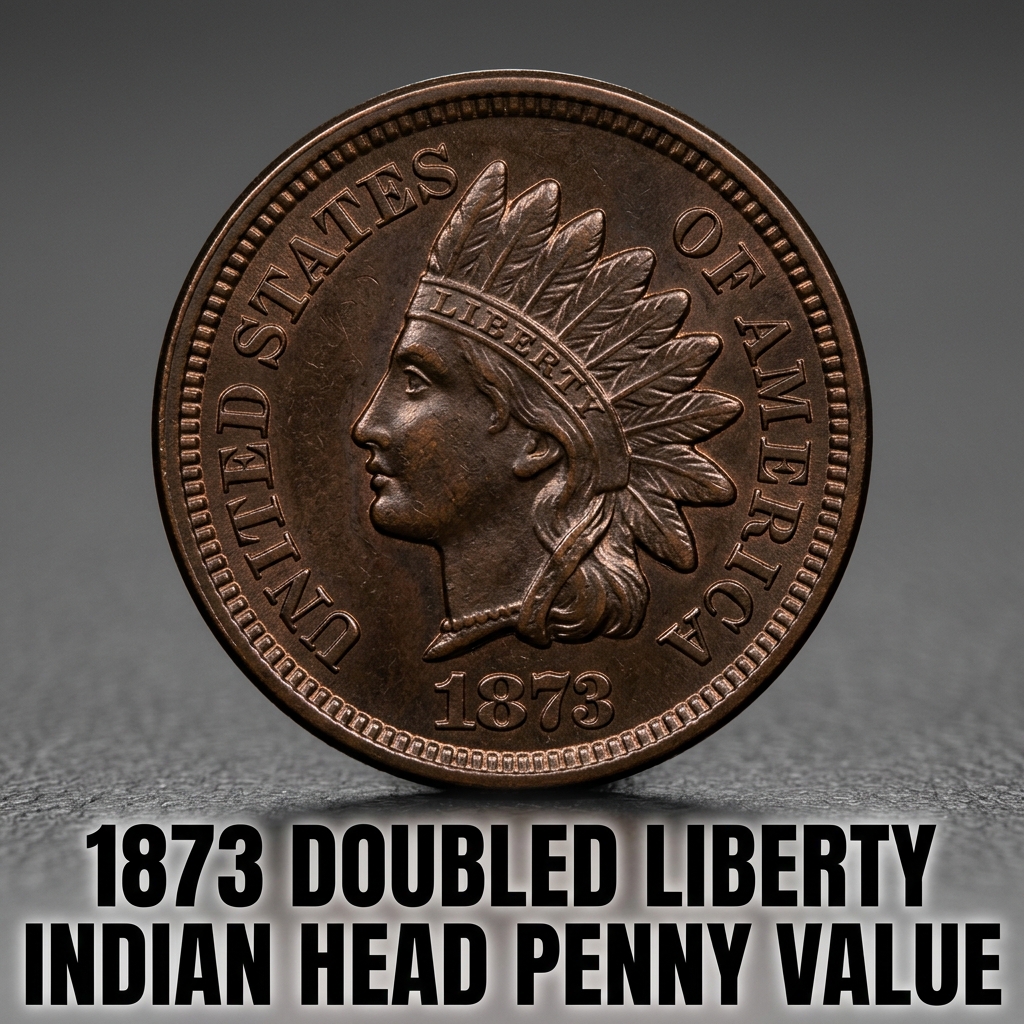
The 1873 Doubled Liberty Indian Head Penny is worth anywhere from $75 in heavily worn condition to over $1,500 or more in high-grade mint state — making it one of the most sought-after varieties in the entire Indian Head series. If you found one of these coins tucked away in an old jar or inherited collection, you may be sitting on a genuinely valuable piece of American history.
What Makes the 1873 Doubled Liberty So Special?
Not every 1873 Indian Head Penny is created equal. The standard 1873 penny is already a collectible coin, but the “Doubled Liberty” variety is something else entirely. This variety shows clear doubling on the word LIBERTY on the headband of the Native American figure — a result of the die being hubbed twice at a slightly different angle during the minting process at the Philadelphia Mint.
This kind of error isn’t something you see every day, which is exactly why collectors go crazy for it. The doubling must be visible to the naked eye or under low magnification to confirm the variety. If you’re not sure whether your coin qualifies, a coin identification app can help you examine the details more closely and narrow down what you’ve got before spending money on a professional appraisal.
The 1873 penny was also issued in two distinct types — the “Open 3” and “Closed 3” — referring to the shape of the numeral 3 in the date. Both types exist with the Doubled Liberty variety, though the Open 3 version tends to attract slightly higher prices among specialists.
How Much Is the 1873 Doubled Liberty Indian Head Penny Worth?
Value depends heavily on the coin’s condition, also known as its grade. A coin that’s been in circulation for decades will show heavy wear on the high points — the feathers, the face, and especially the word LIBERTY. The more readable LIBERTY is, the better.
Here’s a general value breakdown:
| Grade / Condition | Estimated Value |
|---|---|
| Good (G-4) | $75 – $120 |
| Very Good (VG-8) | $130 – $200 |
| Fine (F-12) | $200 – $350 |
| Very Fine (VF-20/30) | $350 – $600 |
| Extremely Fine (EF-40) | $600 – $950 |
| Mint State (MS-60 to MS-65) | $1,000 – $1,500+ |
For a deeper look at certified sale prices and current market trends, you can check out up-to-date 1873 Indian Head Penny price data by grade and color designation — it’s a helpful resource whether you’re buying or selling.
How to Tell If Your 1873 Penny Has the Doubled Liberty
Start by looking at the headband across the forehead of the figure on the obverse (front) of the coin. You’re looking for the letters in LIBERTY to appear doubled — like a slight shadow or echo behind each letter. The doubling is most visible on the L, I, B, and E.
Natural light and a 5x to 10x loupe (magnifying glass) are your best friends here. Avoid harsh overhead lighting, which can flatten out details. Tilt the coin at different angles — doubling often becomes more obvious when light rakes across the surface at a low angle.
If you’re comparing your coin to photos online, make sure the images are of the actual Doubled Liberty variety and not just a regular 1873 penny. CoinKnow is a great tool for side-by-side variety comparison, helping you match your coin’s features to confirmed examples in its database.
Buying and Selling the 1873 Doubled Liberty Indian Head Penny
If you’ve confirmed the variety and want to sell, your best options are coin dealers, major auction houses like Heritage or Stack’s Bowers, or online platforms like eBay. Getting your coin certified by PCGS or NGC first will almost always fetch a higher price, since buyers trust graded and attributed coins much more than raw examples.
On the buying side, collectors often pay a premium for problem-free coins — no cleaning, no damage, no discoloration. A cleaned coin can lose 30–50% of its value even if the grade would otherwise be strong.
It’s also worth comparing values across the Indian Head cent series. For example, if you’re curious how other years stack up, the 1898 Indian Head Penny value guide gives you a good sense of how condition, mint luster, and strike quality affect prices throughout the series.
CoinKnow also tracks recent auction results for key date and variety cents, so you can see real sale prices instead of just price guide estimates.
Is It Worth Getting Professionally Graded?
For a 1873 Doubled Liberty Indian Head Penny, the answer is almost always yes. Grading fees typically run $30–$50 per coin through PCGS or NGC, and for a coin that could be worth several hundred dollars or more, that’s a smart investment. The grading service will also attribute the Doubled Liberty variety on the label, which adds significant collector appeal and resale value.
Don’t clean your coin before submitting it. Even light cleaning with water or a soft cloth can leave microscopic hairlines that graders will catch, and it will result in a “details” grade that dramatically lowers the coin’s market value.
FAQ
Q: How do I know if my 1873 Indian Head Penny is the Doubled Liberty variety?
A: Look at the word LIBERTY on the headband under magnification. If you see visible doubling — where each letter appears to have a faint duplicate slightly offset — you likely have the Doubled Liberty variety. Comparing your coin to verified images in a reference like CoinKnow or a printed variety guide will help you confirm it.
Q: What’s the difference between the 1873 Open 3 and Closed 3, and does it affect value?
A: The Open 3 variety has a gap in the upper curve of the numeral 3 in the date, while the Closed 3 has a fully enclosed loop. Both can appear with the Doubled Liberty variety. The Open 3 version is generally considered slightly scarcer and may bring a modest premium, especially in higher grades.
Q: Should I clean my 1873 Doubled Liberty penny before selling it?
A: No — never clean a collectible coin. Cleaning removes the original surface and leaves behind microscopic scratches that professional graders will detect. A cleaned coin is always worth less than an uncleaned one in similar condition. Leave it as-is and let a professional assess it.