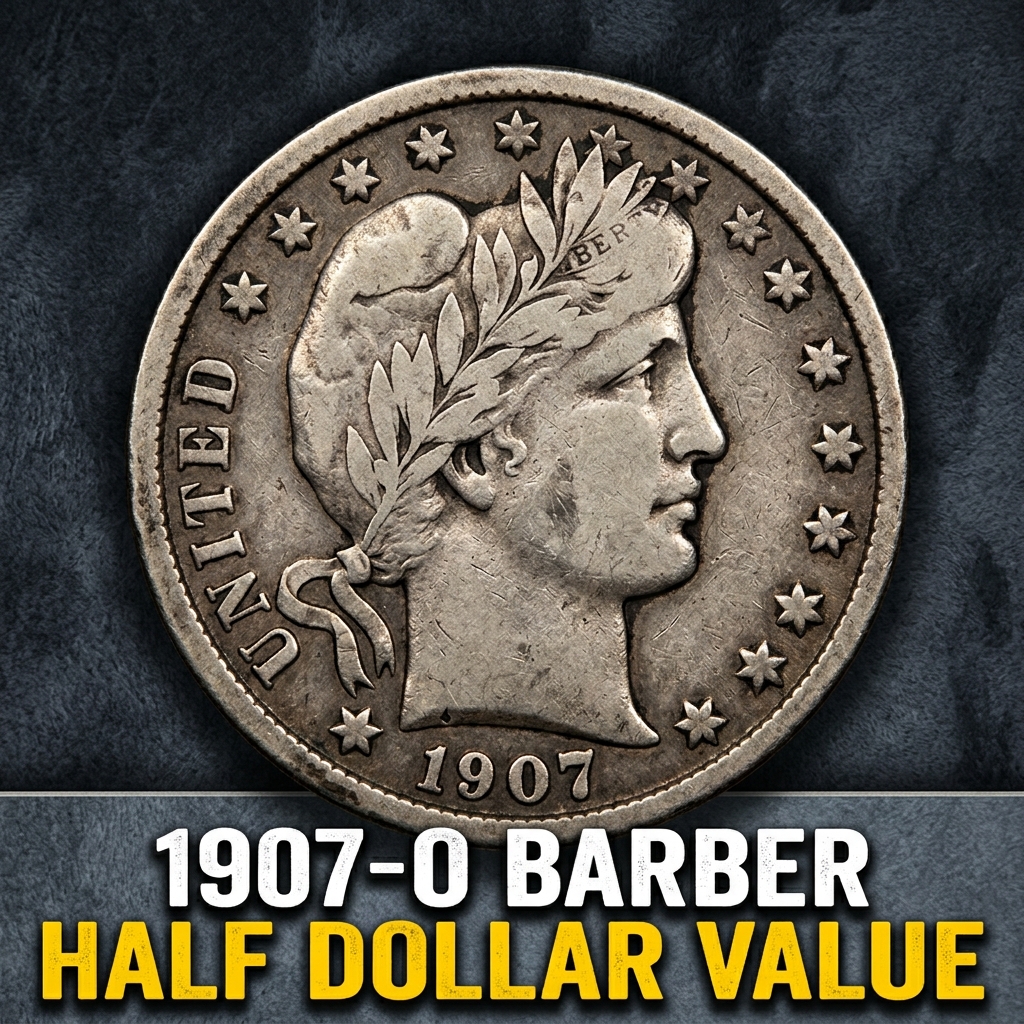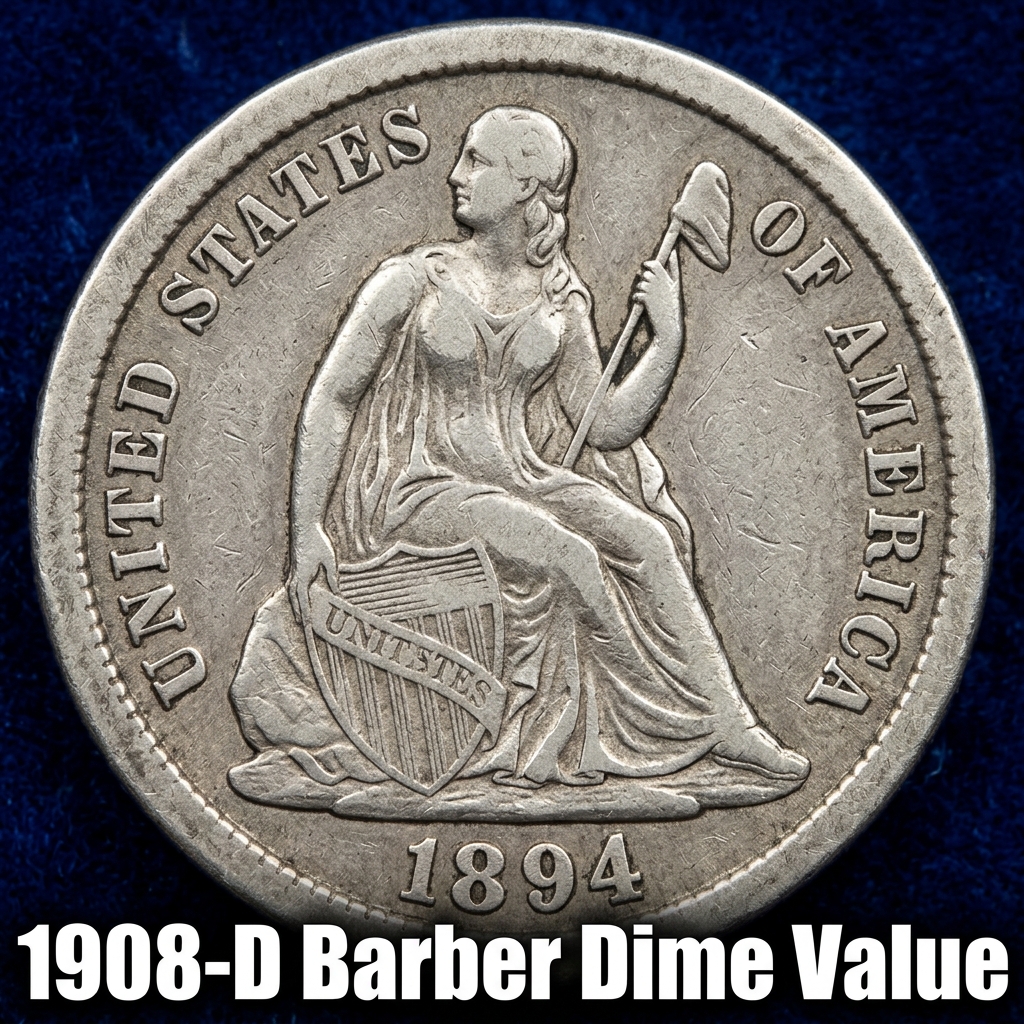
The 1908-D Barber Dime is worth anywhere from $6 in heavily worn condition to well over $150 in fine grades — and in mint state, certified examples can fetch $400 or more. If you found one of these small silver coins tucked away in a drawer or old collection, you may be sitting on a nice little piece of American history.
What Makes the 1908-D Barber Dime Special
The Barber Dime series ran from 1892 to 1916, designed by U.S. Mint Chief Engraver Charles E. Barber. The “D” mintmark on the 1908-D tells you this coin was struck at the Denver Mint — one of three mints producing dimes that year. Denver struck just over 7.4 million of these dimes in 1908, which sounds like a lot, but considering how many were spent, lost, or melted over the decades, circulated survivors in decent shape are harder to find than you’d expect.
If you’re not sure whether what you have is actually a Barber Dime, a good coin identification app can help you confirm the design, date, and mintmark before you start researching its value. The obverse shows Liberty wearing a laurel wreath and Phrygian cap, while the reverse features a simple eagle design. Look for the small “D” mintmark on the reverse, just below the eagle. Without that mintmark, you’d have a Philadelphia issue — still valuable, but a different coin entirely.
1908-D Barber Dime Value by Grade
Grade matters enormously with Barber Dimes. These coins circulated heavily, and most survivors show significant wear. Here’s a general breakdown of what the 1908-D Barber Dime is worth across common grades:
| Grade | Description | Estimated Value |
|---|---|---|
| G-4 (Good) | Heavy wear, date and mintmark visible | $6 – $10 |
| VG-8 (Very Good) | Moderate wear, full rims | $12 – $18 |
| F-12 (Fine) | Even wear, some detail remains | $20 – $35 |
| VF-20 (Very Fine) | Light to moderate wear, good detail | $45 – $75 |
| EF-40 (Extremely Fine) | Light wear on high points | $85 – $150 |
| MS-63 (Mint State) | Uncirculated, minor contact marks | $350 – $500+ |
These are ballpark figures based on recent market trends. For the most current pricing, check out detailed 1908-D Barber Dime value data from CoinValueApp, which tracks real auction results and dealer prices across all grades.
How to Assess the Condition of Your 1908-D Barber Dime
Most 1908-D Barber Dimes you’ll encounter in the wild fall into the Good to Fine range — meaning they’ve been handled a lot over the past century. The key diagnostic areas to examine are Liberty’s hair detail above the ear, the lettering around the rim, and the sharpness of the eagle’s feathers on the reverse. In well-worn pieces, Liberty’s face becomes flat and featureless. In finer examples, you’ll see distinct hair strands and a clearer separation of the headband letters “LIBERTY.”
Cleaning is a major value killer. Many old coins were cleaned by well-meaning owners who wanted them to “look nice.” A cleaned 1908-D Barber Dime will typically sell for 20–50% less than an original-surface coin of the same grade. If your coin looks unnaturally bright or shows fine hairline scratches under a loupe, it was likely cleaned at some point. Using CoinKnow to scan and assess your coin before buying or selling can save you from overestimating what you’ve got.
Where and How to Sell Your 1908-D Barber Dime
If you’ve confirmed what you have and want to sell, your options include coin dealers, online auction platforms like eBay, or specialized numismatic auction houses for higher-grade examples. For coins in Good to Fine condition, a local coin shop is often the easiest route — expect to be offered somewhere between 40–60% of retail value, which is standard in the industry.
For Very Fine or better examples, consider getting the coin professionally graded by PCGS or NGC before selling. A certified MS-63 example in a slab will almost always bring more at auction than a raw coin of the same quality. CoinKnow can help you track your collection’s estimated value over time and alert you when market prices shift, which is especially useful if you’re deciding whether to hold or sell. It’s a practical tool for anyone managing a small collection or dealing with inherited coins.
Silver Content and Melt Value
Don’t overlook the silver. Barber Dimes are composed of 90% silver and contain approximately 0.07234 troy ounces of the metal. With silver prices fluctuating around $28–$30 per troy ounce in recent periods, the raw melt value of a 1908-D Barber Dime sits around $2.00–$2.15. That means even the most heavily worn, barely identifiable example is worth at least its silver weight — and most are worth considerably more as collectibles. CoinKnow automatically factors in current silver spot prices when generating estimates, giving you a more accurate baseline.
FAQ
Q: How do I know if my dime is the 1908-D and not another year or mint?
A: Check the obverse for the date “1908” and then flip the coin over to look for a small “D” mintmark below the eagle on the reverse. If there’s no mintmark, it’s from Philadelphia. If it says “S,” it’s from San Francisco — a different coin with different value.
Q: Is a 1908-D Barber Dime rare?
A: It’s not considered a key date, but it’s not common in higher grades either. With a mintage of about 7.49 million, there are survivors — but most are well-worn. Finding one in Very Fine or better condition is genuinely uncommon, and mint state examples are quite scarce.
Q: Should I clean my 1908-D Barber Dime before selling it?
A: No — absolutely not. Cleaning a coin, even gently, almost always reduces its value in the eyes of collectors and dealers. Leave it as-is and let the buyer or a grading service assess it in its natural state. Original surface coins, even worn ones, are more desirable than cleaned ones.