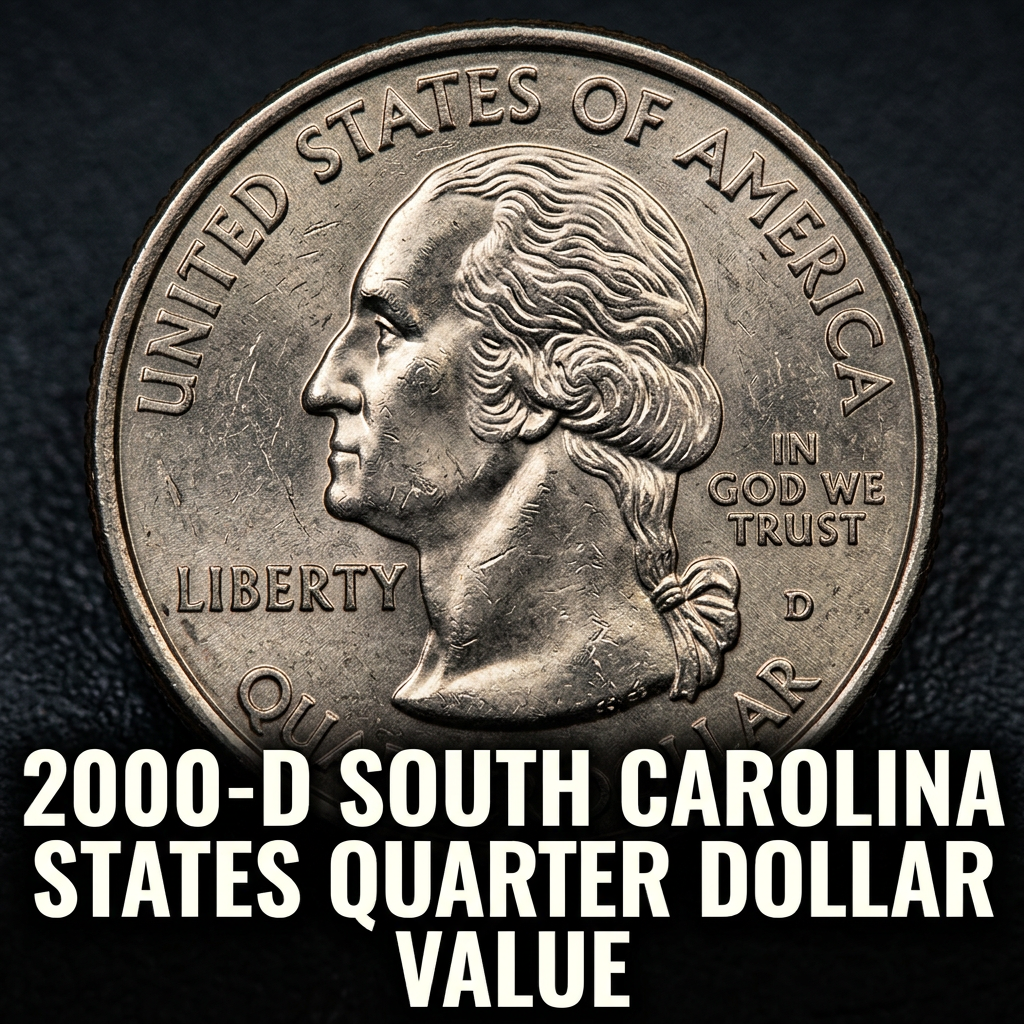
The 2000-D South Carolina State Quarter is worth anywhere from 25 cents in heavily circulated condition to $15 or more in pristine mint state, with some exceptional examples reaching even higher at auction. If you found one of these in your change jar or a coin collection, you’re in the right place to find out exactly what it’s worth.
coin identification app tools have made it easier than ever for everyday collectors to identify and value coins like this one without needing to visit a coin dealer. Whether you’re a casual collector or just curious about that quarter sitting on your dresser, understanding the basics of coin grading and mint marks will help you get a fair picture of your coin’s value.
What Is the 2000-D South Carolina State Quarter?
The 2000-D South Carolina State Quarter was minted at the Denver Mint in 2000 as part of the United States Mint’s 50 State Quarters Program, which ran from 1999 to 2008. The “D” mint mark on this coin indicates it was struck in Denver, and it was released as the eighth coin in the series. South Carolina’s design features the state’s outline, a Carolina Wren (the state bird), a Yellow Jessamine (the state flower), and a Sabal Palmetto tree — a beautiful design that makes it a favorite among collectors. The Denver Mint produced over 566 million of these quarters, which means they’re relatively common in circulated grades. However, high-grade examples — especially those graded MS-67 or better by PCGS or NGC — can be surprisingly valuable. The coin was designed by Thomas D. Rogers Sr. and carries the standard Washington obverse portrait on the front, making it instantly recognizable.
2000-D South Carolina Quarter Value by Grade
The value of your 2000-D South Carolina State Quarter depends almost entirely on its condition, also called its grade. Coins that have been passed through commerce for years show wear, reducing their value. Meanwhile, coins kept in mint state can command significant premiums. Here’s a quick breakdown:
| Grade | Condition Description | Estimated Value |
|---|---|---|
| Good (G-4) | Heavy wear, details visible | Face value ($0.25) |
| Fine (F-12) | Moderate wear, major details clear | $0.25 – $0.50 |
| Extremely Fine (EF-40) | Light wear on high points | $0.50 – $1.00 |
| MS-63 | Mint state, minor blemishes | $1.00 – $3.00 |
| MS-65 | Gem mint state, few marks | $3.00 – $8.00 |
| MS-67+ | Superb gem, near perfect | $15.00 – $50.00+ |
If you want to compare how the 2000-D stacks up against its Philadelphia Mint sibling, you can check out detailed price data for the 2000-P Massachusetts State Quarter in mint state grades to better understand how Denver and Philadelphia coins differ in collector demand and pricing trends.
Errors and Varieties That Could Make Your Quarter More Valuable
Not all 2000-D South Carolina quarters are created equal. Some coins were struck with errors during the minting process, and these can be worth significantly more than standard examples. Common error types to look for include die cracks, off-center strikes, and doubled die varieties. An off-center strike — where the design is noticeably shifted to one side — can turn a 25-cent coin into one worth $25 or more depending on severity. Broadstruck errors, where the collar die fails and the coin spreads beyond its normal diameter, are another variety worth hunting for. Even minor doubling on the lettering or design elements can attract the attention of serious collectors. To check your coin for errors, use a good magnifying glass or loupe and compare it closely to reference images. CoinKnow is a great tool for this — the app helps you identify potential error coins by comparing your photos against a large database of known varieties and errors across U.S. coin series.
How to Get the Best Price for Your 2000-D South Carolina Quarter
If you believe your coin is in excellent condition or you’ve spotted what looks like an error, it may be worth getting it professionally graded by PCGS or NGC. Professional grading gives your coin a certified grade and places it in a tamper-evident holder, which significantly boosts buyer confidence and resale value. For MS-67 or higher coins, the certification cost is usually well worth it. For coins in circulated condition, selling through eBay or at a local coin show is perfectly reasonable — you won’t get much above face value, but you’ll find buyers quickly. You can also get a broader sense of current 2000 quarter values across different grades and mint marks before you decide whether to sell, hold, or submit for grading. And if you have a full roll or a collection of state quarters, CoinKnow can help you catalog and value your entire set in minutes, saving you hours of research.
FAQ
Q: How many 2000-D South Carolina quarters were made?
A: The Denver Mint produced approximately 566,208,000 South Carolina State Quarters in 2000, making them quite common in circulated grades. This high mintage is the main reason most circulated examples are worth only face value.
Q: Is the 2000-D South Carolina quarter silver?
A: No. Like all standard-issue State Quarters, the 2000-D South Carolina quarter is made of a copper-nickel clad composition. It contains no silver. However, special 90% silver proof versions were sold directly to collectors by the U.S. Mint and are worth more — typically $5 to $10 each.
Q: How can I tell if my 2000-D South Carolina quarter is valuable?
A: Start by checking the coin’s condition — look for sharp details, original luster, and no signs of heavy wear or cleaning. Then check for any visible errors like off-center strikes or doubling. For a quick estimate, CoinKnow lets you photograph your coin and get an instant value range based on its grade and known varieties, making it one of the easiest ways for beginners to start evaluating their finds.