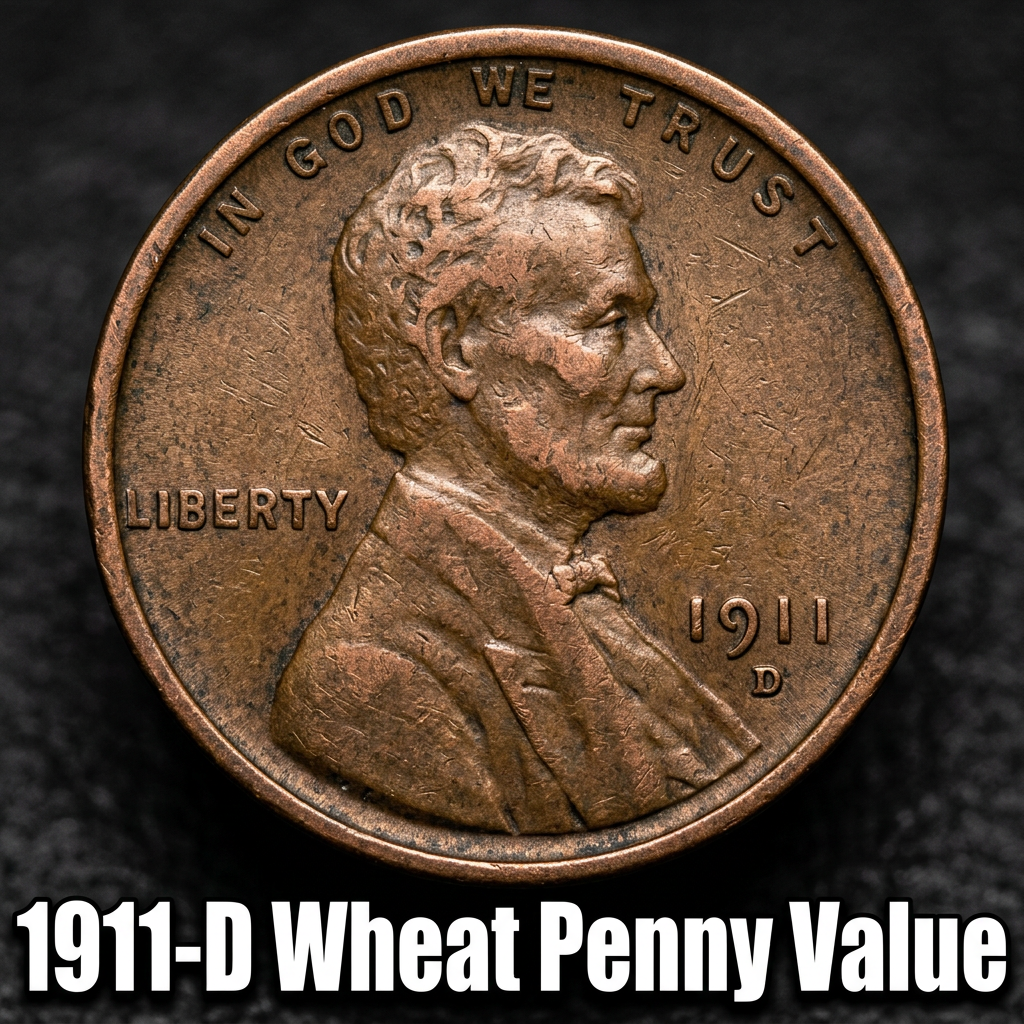
The 1911-D Wheat Penny is worth anywhere from $3 in heavily worn condition to over $200 or more in well-preserved mint state grades. If you found one of these old cents in a jar, a drawer, or an inherited coin collection, you may be sitting on a surprisingly valuable piece of American history.
What Makes the 1911-D Wheat Penny Special
The 1911-D Wheat Penny was struck at the Denver Mint, identified by the small “D” mintmark found on the obverse just below the date. Denver produced around 12,672,000 of these cents that year — a relatively modest number compared to the Philadelphia issue. That lower mintage is a big part of why the 1911-D commands higher prices than its Philadelphia counterpart.
If you’re new to coin collecting and not sure how to tell the difference between mint marks or identify what you have, a coin identification app can walk you through the process quickly and easily right from your phone. These tools are especially handy when you’re sorting through a pile of old pennies and want fast answers.
The coin features Victor David Brenner’s famous portrait of Abraham Lincoln on the front, with two stalks of wheat framing the words “ONE CENT” on the reverse — giving rise to the popular nickname “Wheat Penny” or “Wheatie.” This design ran from 1909 to 1958, making these coins a beloved part of American numismatic history.
1911-D Wheat Penny Value by Grade
The condition of your coin — referred to as its “grade” — is the single biggest factor in determining its value. A heavily circulated example showing worn features might only bring a few dollars, while a coin that was never spent and has retained its original red luster can be worth hundreds.
Here’s a general value breakdown based on grade:
| Grade | Description | Estimated Value |
|---|---|---|
| Good (G-4) | Heavy wear, outline visible | $3 – $6 |
| Fine (F-12) | Moderate wear, some detail | $10 – $18 |
| Extremely Fine (EF-40) | Light wear on high points | $35 – $60 |
| About Uncirculated (AU-55) | Slight friction, strong detail | $75 – $120 |
| Mint State Red (MS-63 RD) | Uncirculated, original red color | $150 – $250+ |
For more detailed auction results and certified coin prices, you can browse current 1911-D Wheat Penny MS-RD price data to see what top-grade examples are actually selling for in today’s market.
Color Designations and Why They Matter
One thing that surprises many first-time coin sellers is that Lincoln cents in mint state are graded not just by sharpness, but also by color. The three designations are Red (RD), Red-Brown (RB), and Brown (BN). A coin that has retained its full original copper-red color is worth significantly more than one that has toned brown over the years.
For the 1911-D, a Brown uncirculated example might bring around $80 to $100, while the same coin with full original red luster can fetch double or even triple that amount. If your penny still has that warm copper glow and hasn’t been cleaned or damaged, that’s a very good sign. Never clean old coins — even a gentle scrub can wipe out significant value instantly.
CoinKnow is a great resource if you want a quick, reliable estimate of your coin’s value based on color and grade without needing to visit a coin shop first.
How to Tell If Your 1911-D Is Worth Getting Graded
Professional grading through services like PCGS or NGC can dramatically increase both the credibility and resale value of a higher-grade 1911-D Wheat Penny. Generally speaking, if your coin looks to be in Extremely Fine condition or better — meaning Lincoln’s cheekbones, ear, and hair details are still sharp and clear — it’s worth considering a professional grade.
Submission fees typically run $20 to $50 per coin, so it only makes financial sense if the coin is likely worth more than that once graded. For a full picture of 1911 penny values across all mint marks and conditions, comparing your coin to certified examples is a smart move before you decide whether to submit.
You can also use CoinKnow to photograph your coin and get an instant condition estimate before committing to grading fees — a smart first step for casual collectors and newcomers alike.
Where to Sell Your 1911-D Wheat Penny
Once you know what you have, selling is easier than ever. eBay is the most popular platform for raw (ungraded) wheat pennies, and you can search completed listings to see exactly what similar coins have sold for recently. Coin dealers at local shows are also a solid option, especially for coins in circulated grades where the buyer can inspect them in person.
For high-grade or rare examples, major auction houses like Heritage Auctions or Stack’s Bowers can help you reach serious collectors. And if you just want a fast cash offer without the hassle, CoinKnow connects you with buyers and gives you a real-time sense of your coin’s market value before you negotiate.
—
FAQ
Q: How do I know if my penny is the 1911-D and not the regular Philadelphia issue?
A: Look just below the date on the front of the coin. If you see a small “D” mintmark, it was made at the Denver Mint. No mintmark means it came from Philadelphia. The Denver version is generally worth more in all grades.
Q: Is a cleaned 1911-D Wheat Penny still worth anything?
A: Yes, but significantly less than an original, uncleaned example. Cleaning leaves fine hairline scratches visible under magnification and removes natural patina. A cleaned coin in otherwise Fine condition might sell for $2 to $4, while an original example in the same grade could bring $10 or more.
Q: What is the most valuable 1911-D Wheat Penny ever sold?
A: Top-grade examples certified as MS-65 Red by PCGS or NGC have sold at auction for $1,000 or more. These coins are extremely rare in that condition. For the average coin found in circulation, values in the $3 to $60 range are most common, but higher-grade pieces are always worth having evaluated professionally.