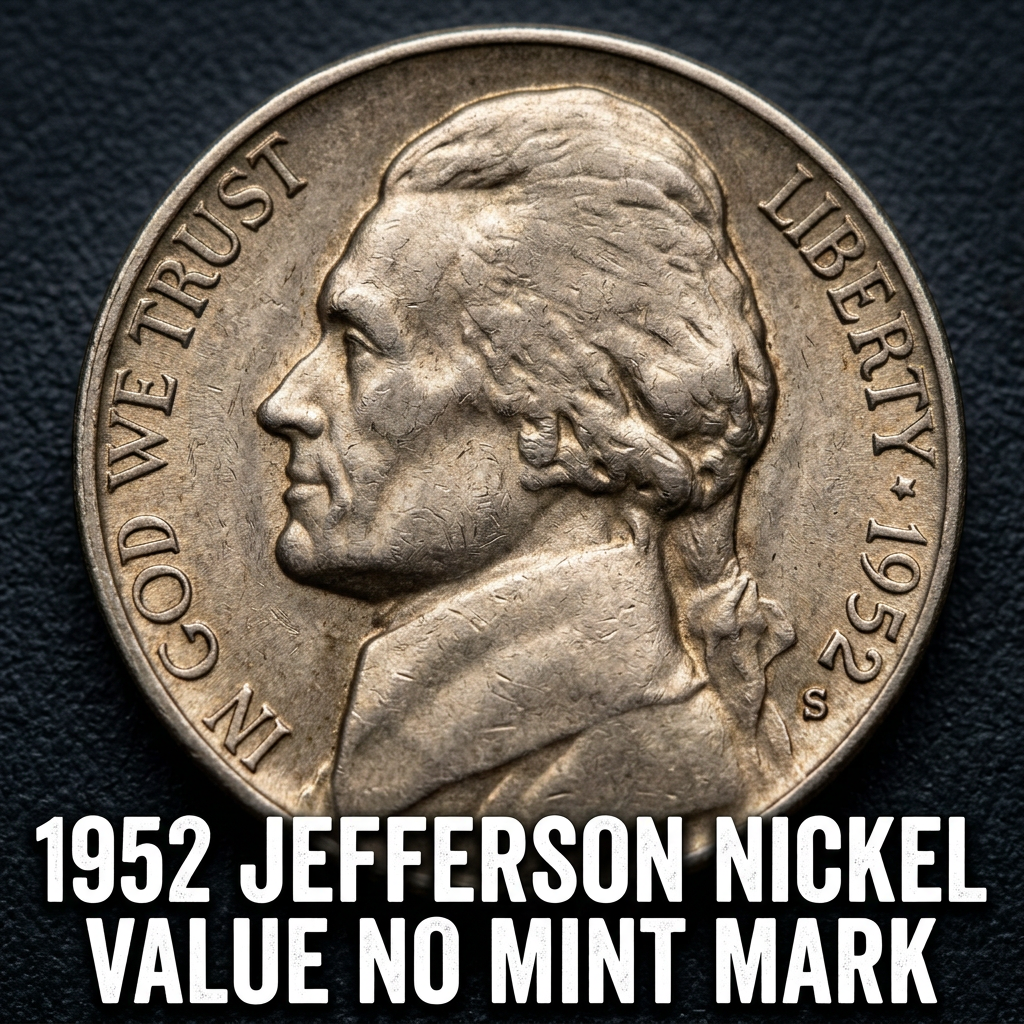
The 1952 Jefferson Nickel with no mint mark is worth anywhere from $0.10 in heavily worn condition to over $100 in gem uncirculated grades. Most coins you find in pocket change fall in the middle range, but a few hidden gems can surprise you.
If you’ve come across one of these old nickels and you’re not sure what you’re holding, you’re in the right place. Using a coin identification app is a great first step — it can help you quickly confirm the date, mint mark, and basic grade before you dig deeper. The 1952 Jefferson Nickel was struck at the Philadelphia Mint, which is why it carries no mint mark at all. That was standard practice for Philadelphia coins at the time. In this guide, we’ll walk you through everything a regular coin finder needs to know about this particular nickel, from face value to potential collector premiums.
A Quick Look at the 1952 No Mint Mark Nickel
The Philadelphia Mint produced 64,069,980 Jefferson Nickels in 1952 — that’s a lot of coins. Because of this large mintage, the 1952 no mint mark nickel is not considered rare in circulated grades. However, numismatists (that’s just a fancy word for coin collectors) still value well-preserved examples, especially those with full steps on Monticello. Full steps refers to the sharp, uninterrupted horizontal lines at the base of the building on the coin’s reverse side. Coins with five or six complete steps command a significant premium. A coin that looks common in your hand could actually be worth real money to the right collector. Before you spend it or toss it in a jar, take a closer look. CoinKnow is a handy tool that helps everyday people quickly identify features like full steps so you don’t leave money on the table.
1952 Jefferson Nickel Value by Grade
Coin value is all about condition. Numismatists use a scale from 1 to 70 called the Sheldon Scale to describe a coin’s state of preservation. Here’s a general breakdown of what a 1952 Philadelphia Nickel is worth across different grades:
| Grade | Description | Estimated Value |
|---|---|---|
| Good (G-4) | Heavy wear, outline visible | $0.10 – $0.25 |
| Fine (F-12) | Moderate wear, details clear | $0.25 – $0.50 |
| Extremely Fine (EF-40) | Light wear on high points | $1 – $3 |
| About Uncirculated (AU-55) | Slight wear, most luster remains | $3 – $8 |
| MS-63 | Uncirculated, minor marks | $10 – $20 |
| MS-65 | Gem uncirculated, sharp strike | $30 – $60 |
| MS-65 Full Steps | Gem grade with complete steps | $75 – $150+ |
For the most up-to-date market data, you can check the 1952 Jefferson Nickel price data across mint state grades to see how recent auction results are trending.
What Makes a 1952 Philadelphia Nickel More Valuable
Several factors can push your coin’s value beyond the baseline. The most important are strike quality, luster, and the presence of full steps on Monticello. Strike quality matters because Philadelphia sometimes produced coins with a softer strike in this era, meaning the steps on Monticello weren’t always fully formed even on brand-new coins. A sharp, well-struck example is harder to find than you might think. Beyond strike, original luster — that cartwheel-like shine on uncirculated coins — makes a huge difference. A coin that has been cleaned or polished actually loses value, not gains it. Collectors strongly prefer coins that have never been tampered with. If your 1952 nickel looks bright and shiny in an unusual way, it may have been cleaned, which reduces its appeal to buyers. CoinKnow can walk you through how to evaluate luster and spot cleaned coins before you try to sell.
How to Sell a 1952 No Mint Mark Nickel
If you think you’ve got a nice example, there are several ways to turn it into cash. Online auction platforms like eBay are popular for common dates in mid-grades, while professional auction houses handle high-grade certified coins. Getting your coin graded by PCGS or NGC is worth considering for any coin you believe grades MS-63 or higher — especially if it has full steps. Certification protects both you and the buyer. For a complete breakdown of what your 1952 nickel is worth in all conditions and mint mark varieties, it’s a good idea to compare multiple sources before selling. Don’t rush — knowing the current market puts you in a stronger position. CoinKnow also offers guidance on where and how to sell coins based on what you’ve identified.
—
FAQ
Q: Is a 1952 Jefferson Nickel with no mint mark rare?
A: No, the 1952 Philadelphia Nickel is not rare. Over 64 million were minted. However, high-grade examples with full steps are genuinely scarce and worth significantly more to collectors.
Q: How do I know if my 1952 nickel has full steps?
A: Look at the reverse side of the coin under good lighting and a magnifying glass. The steps at the base of Monticello should appear as sharp, complete horizontal lines with no breaks. Five complete steps qualifies as Full Steps (5FS), and six is even better (6FS).
Q: Should I clean my 1952 Jefferson Nickel before selling it?
A: Absolutely not. Cleaning a coin removes its original surface and luster, which dramatically reduces its value. Collectors and dealers can immediately spot a cleaned coin, and it will fetch a lower price than an untouched coin in the same grade.