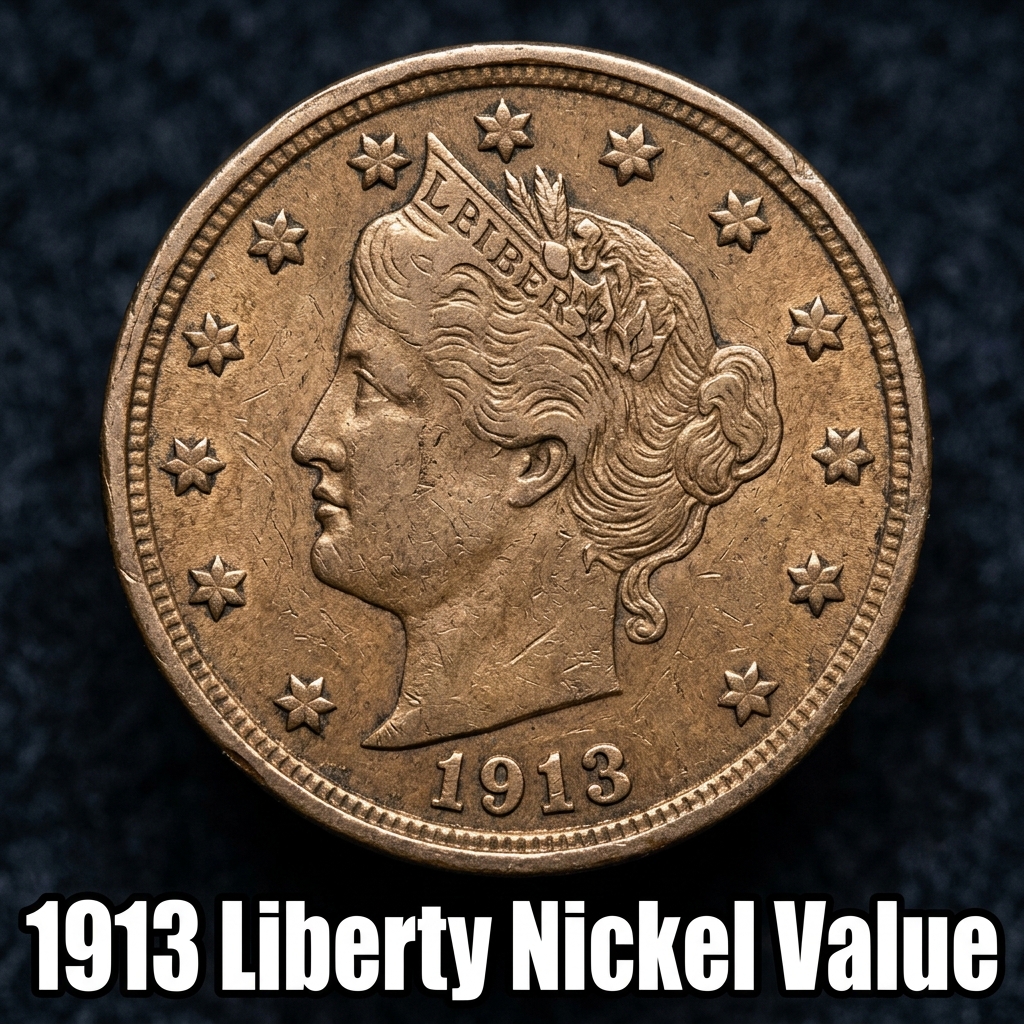
The 1913 Liberty Nickel is one of the most famous and valuable coins in American numismatic history, worth anywhere from a few hundred dollars for a common Buffalo Nickel from that year to literally millions of dollars if you’re lucky enough to hold one of the five known Liberty Head specimens. Yes, you read that right — millions.
What Makes the 1913 Nickel So Special?
Here’s the thing about 1913 nickels — there are actually two very different coins that carry that date, and they couldn’t be more different in value. The first is the 1913 Buffalo Nickel (also called the Indian Head Nickel), which was officially produced by the U.S. Mint that year. The second is the legendary 1913 Liberty Head Nickel, a coin that was never officially authorized for public release, making it one of the rarest and most sought-after coins in existence.
If you’re holding a nickel from 1913 and wondering what it’s worth, the best first step is figuring out exactly which coin you have. A good coin identification app can help you quickly identify the design on your coin — look at the front (obverse) to see whether it shows a Native American profile (Buffalo Nickel) or the classic Liberty Head design. That distinction alone can mean the difference between a $10 coin and a $4 million coin.
The 1913 Buffalo Nickel and What It’s Worth
The Buffalo Nickel was introduced in 1913, replacing the Liberty Head design. Two types were minted that year — Type 1 (Mound reverse, where the buffalo stands on a raised mound) and Type 2 (Line reverse, where the mound was flattened). Both are collectible, but Type 1 coins tend to command slightly higher values.
For most people who find a 1913 Buffalo Nickel in their pocket change or grandparent’s drawer, the condition is the biggest factor. Heavily worn coins might be worth $10–$30, while well-preserved examples in fine or extra fine condition can fetch $50–$150. Uncirculated specimens are where things get exciting.
| Grade | 1913 Type 1 (No Mint Mark) | 1913-D Type 1 | 1913-S Type 1 |
|---|---|---|---|
| Good (G-4) | $15–$25 | $20–$35 | $25–$45 |
| Fine (F-12) | $40–$60 | $60–$90 | $80–$120 |
| Extremely Fine (EF-40) | $100–$140 | $150–$200 | $200–$280 |
| MS-63 (Uncirculated) | $350–$500 | $700–$1,000 | $1,200–$1,800 |
| MS-65 (Gem Uncirculated) | $1,500–$2,500 | $3,000–$5,000 | $6,000–$10,000+ |
For a detailed breakdown of 1913 Type 1 Buffalo Nickel prices in mint state grades, you’ll find certified auction results and population data that can really help you understand what a top-condition coin is worth in today’s market.
Mint Marks Matter More Than You Think
On the 1913 Buffalo Nickel, mint marks are found on the reverse side, just below the words “FIVE CENTS.” A coin with no mint mark was made in Philadelphia. A “D” means Denver, and an “S” means San Francisco. San Francisco struck the fewest coins in 1913, making 1913-S nickels the scarcest and most valuable of the three.
When you’re checking your coin, use a magnifying glass and good lighting. The mint mark can be faint on worn coins but is critical in determining value. This is exactly the kind of detail that CoinKnow is designed to help with — the app walks you through exactly what to look for on each coin type, making the identification process surprisingly simple even if you’ve never collected coins before.
The 1913 Liberty Head Nickel — A Million-Dollar Mystery
Now let’s talk about the big one. The 1913 Liberty Head Nickel was not officially authorized by the U.S. Mint. Only five examples are known to exist, and the story of how they came to be is still somewhat murky — most numismatic historians believe a Mint employee named Samuel Brown secretly struck them before the Liberty Head dies were retired.
Each of the five known specimens has a name, a provenance history, and an astronomical price tag. The last time one sold publicly, it fetched over $4.5 million. These coins appear in major auction houses, museum collections, and private vaults — not in old shoeboxes. But hey, stranger things have happened. If your 1913 nickel shows a woman wearing a crown with “LIBERTY” on it rather than a buffalo, get it authenticated immediately.
You can explore a full breakdown of 1913 nickel value information including both types to understand the complete picture before visiting a dealer or submitting your coin for grading.
How to Get an Accurate Value for Your 1913 Nickel
Once you’ve identified your coin, the next step is getting a realistic sense of its current market value. Coin values shift with collector demand, auction results, and metal prices — so a static list doesn’t always tell the whole story.
CoinKnow is one of the easiest tools for everyday Americans to get up-to-date coin valuations. You can scan your coin, compare it to graded examples, and get a value range based on real market data. For serious coins — anything you believe might be worth over $100 — consider having it professionally graded by PCGS or NGC. Encapsulated, certified coins always sell for more and give buyers confidence in the grade.
Whether you’re selling at a coin show, on eBay, or to a local dealer, knowing your coin’s grade and approximate value puts you in a much stronger position. And with tools like CoinKnow, that knowledge is now easier to get than ever.
FAQ
Q: How do I know if I have a Buffalo Nickel or a Liberty Head Nickel from 1913?
A: Look at the front of the coin. If it shows a Native American in profile with “LIBERTY” at the top, it’s a Buffalo Nickel. If it shows a woman wearing a tiara or coronet with stars around her and “LIBERTY” on the crown itself, you may have a Liberty Head — get it authenticated right away.
Q: Is a worn 1913 Buffalo Nickel worth keeping?
A: Absolutely. Even in heavily worn condition, a genuine 1913 Buffalo Nickel is worth $15–$30 or more, and rarer mint marks like the 1913-S can bring significantly more. It’s always worth checking before spending or tossing an old nickel.
Q: Where can I sell my 1913 nickel for the best price?
A: For common circulated examples, a local coin dealer or online marketplaces like eBay work well. For higher-grade or uncirculated coins, consider submitting to a major auction house like Heritage Auctions or Stack’s Bowers. Getting the coin certified by PCGS or NGC first will typically increase your final sale price.