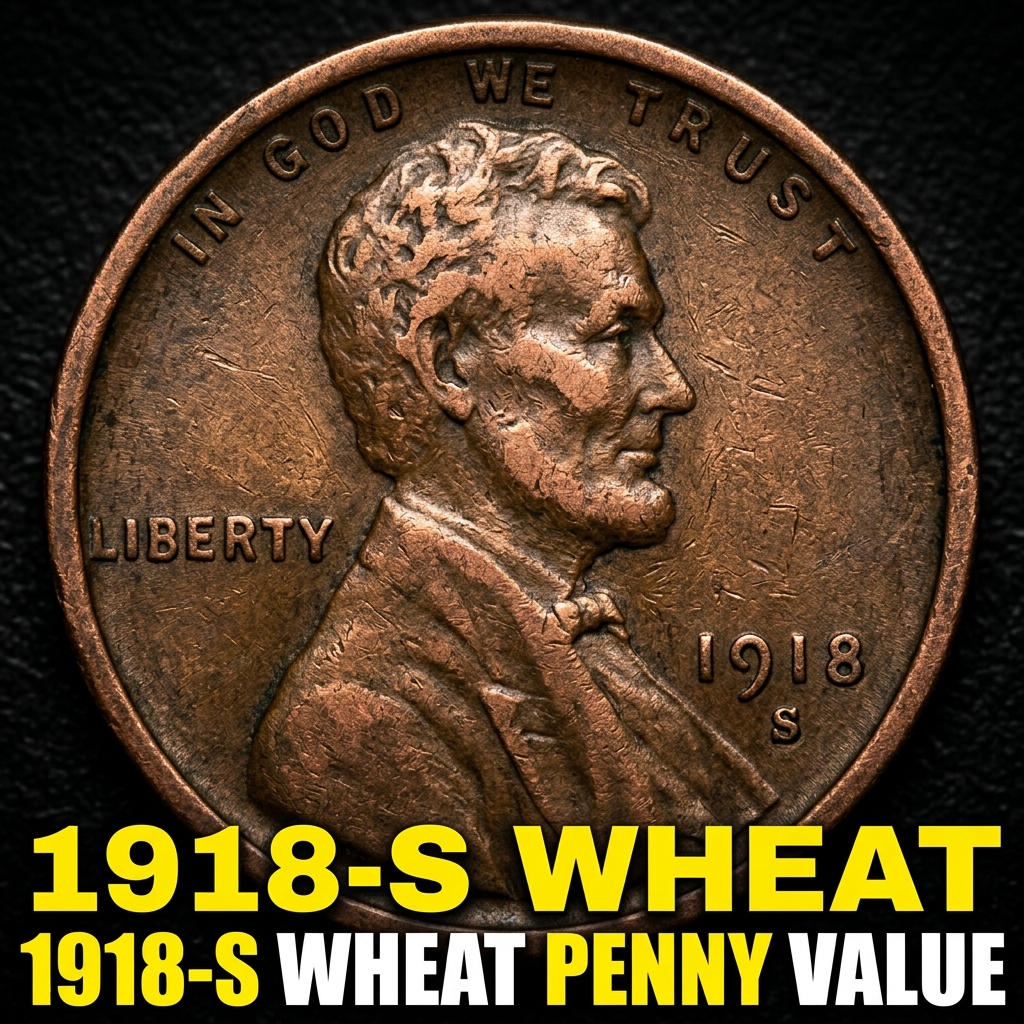
The 1918-S Wheat Penny is worth anywhere from $0.50 in heavily worn condition to well over $200 in higher mint state grades — and rare examples in pristine condition can fetch even more at auction. If you recently found one of these old Lincoln cents in a jar, drawer, or inherited collection, you’re in the right place to find out exactly what you’ve got.
What Makes the 1918-S Wheat Penny Special
The 1918-S Wheat Penny was struck at the San Francisco Mint during World War I, a time when the U.S. Mint was working overtime to keep up with demand for circulating coinage. The small “S” mintmark you’ll find on the obverse, just below the date, tells you this coin came from California — not Philadelphia or Denver. San Francisco-minted Lincoln cents from this era are generally considered slightly harder to find in top condition than their Philadelphia counterparts, which adds to their collectible appeal.
The coin features the classic Lincoln portrait designed by Victor David Brenner on the front and the iconic wheat stalks on the reverse — the design that gives all Lincoln cents from 1909 to 1958 the nickname “Wheat Pennies.” If you’re not sure which mint your coin came from or want to confirm its identity, a coin identification app can help you quickly match the features before you start researching values.
For collectors and casual finders alike, the 1918-S is a solid, historically interesting coin that’s worth understanding in detail.
1918-S Wheat Penny Value by Grade
The value of any coin depends heavily on its condition, or “grade.” A 1918-S Wheat Penny that has been circulated for decades and shows heavy wear is worth far less than one that somehow escaped use and retained its original luster. Here’s a general breakdown of what you can expect:
| Grade | Description | Estimated Value |
|---|---|---|
| Good (G-4) | Heavy wear, outline visible | $0.50 – $1.50 |
| Fine (F-12) | Moderate wear, some detail | $3 – $6 |
| Extremely Fine (EF-40) | Light wear on high points | $15 – $30 |
| About Uncirculated (AU-55) | Slight wear, nearly full luster | $40 – $75 |
| Mint State (MS-63) | Uncirculated, some marks | $100 – $175 |
| Mint State (MS-65+) | Gem uncirculated, sharp strike | $200 – $500+ |
For the most up-to-date pricing data across all grades, you can view current 1918-S Wheat Penny market prices in MS Red condition to see what these coins are actually selling for today.
How to Grade Your 1918-S Wheat Penny at Home
You don’t need to be a professional numismatist to get a rough idea of your coin’s grade. Start by examining it under good lighting — natural daylight or a bright lamp works well. Look at Lincoln’s cheek, the hair above his ear, and the wheat stalks on the reverse. If those high points are completely flat and worn smooth, you’re likely looking at a Good or Fine coin. If you can still see hair detail and the wheat lines are crisp, you might have a coin in the Extremely Fine or better range.
One practical tool many collectors now use is the CoinKnow app. CoinKnow lets you scan your coin using your smartphone camera, estimates its grade range, and shows you comparable recent sales — a great starting point before you head to a dealer or submit for professional grading.
Cleaning your coin is something to absolutely avoid. Many well-meaning people scrub old coins thinking it will improve their appearance, but cleaning actually destroys the natural surface and dramatically reduces value. Leave it as-is.
Mintage Numbers and Rarity of the 1918-S
The San Francisco Mint produced approximately 34,680,000 Lincoln cents in 1918. While that sounds like a lot, it’s worth noting that the vast majority of those coins went into circulation and experienced decades of wear. Finding a genuinely uncirculated 1918-S Wheat Penny today is uncommon, which is exactly why mint state examples carry strong premiums.
By comparison, the Philadelphia Mint produced over 288 million Lincoln cents that same year, making the “P” version far more common. The Denver Mint struck about 47.8 million. So the San Francisco issue is the lowest-mintage of the three 1918 Lincoln cent varieties — a fact that supports its collector value.
If you want a deeper look at 1918 penny value information broken down by mint and grade, that resource walks through each variety in detail and is worth bookmarking for reference.
Where to Sell or Get Your 1918-S Wheat Penny Appraised
If you think your coin might be worth a meaningful amount — say $50 or more — it’s a smart move to get a second opinion before selling. Local coin dealers are a convenient option, though they’ll typically offer wholesale prices since they need room to profit on resale. For higher-value coins, consider submitting to a professional grading service like PCGS or NGC. A certified grade in a tamper-evident holder can significantly increase buyer confidence and realized sale prices.
Online platforms like eBay are also useful for checking recent “sold” listings to see what real buyers paid for similar coins. The CoinKnow app is another handy tool in this process — it aggregates price data and recent auction results so you can walk into any negotiation with real numbers behind you.
FAQ
Q: Is a 1918-S Wheat Penny rare?
A: It’s not extremely rare, but it is the lowest-mintage of the three 1918 Lincoln cent varieties. Finding one in uncirculated condition is genuinely uncommon, and gem mint state examples are considered scarce among collectors.
Q: How can I tell if my penny is the 1918-S and not another mint?
A: Look just below the date on the obverse side of the coin. A small letter “S” indicates San Francisco. No mintmark means Philadelphia, and a “D” means Denver. A magnifying glass or loupe makes this much easier to read on worn coins.
Q: Does it matter if the coin is red, brown, or red-brown?
A: Yes, it matters quite a bit for uncirculated coins. Copper cents are graded by their original surface color — “Red” (RD) coins that retain 95% or more of their original mint luster command the highest premiums. “Red-Brown” (RB) and “Brown” (BN) designations are used for coins with less original color, and they typically sell for noticeably less in the same numerical grade.