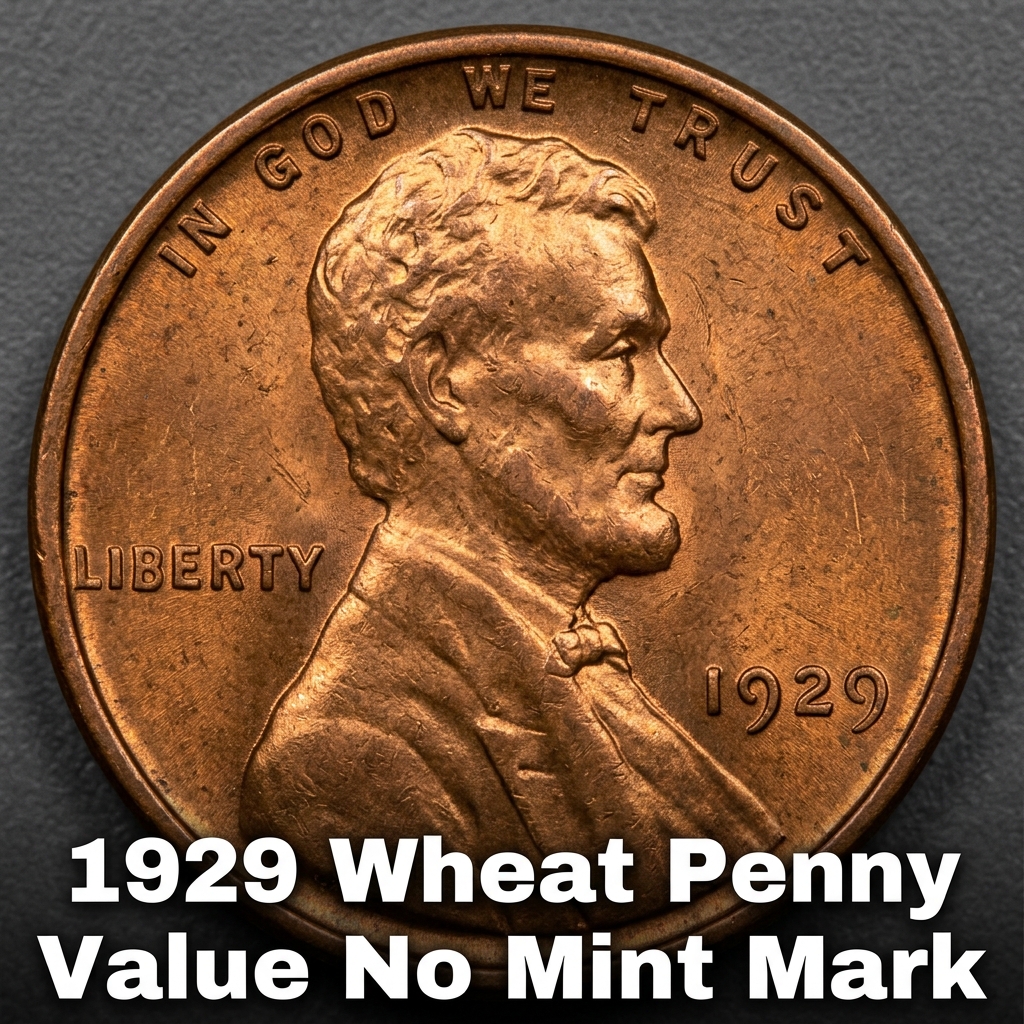
The 1929 Wheat Penny with no mint mark is worth anywhere from $0.15 in heavily worn condition to over $30 in well-preserved mint state grades — and certain high-grade examples have sold for significantly more at auction. If you found one in a coin jar or old collection, you’re holding a piece of American history that may be worth more than you think.
What Is the 1929 Wheat Penny No Mint Mark?
The 1929 Lincoln Wheat Penny with no mint mark was struck at the Philadelphia Mint, which was standard practice at the time — Philadelphia didn’t add a mint mark to cents until much later. This coin features the familiar portrait of Abraham Lincoln on the obverse and two wheat stalks framing “ONE CENT” on the reverse, a design introduced by Victor David Brenner in 1909.
In 1929, the U.S. Mint produced over 185 million of these cents at the Philadelphia facility alone, making them relatively common in circulated grades. That said, finding one in excellent condition is a different story. If you’re not sure what you’ve got, a coin identification app can help you quickly confirm the date, mint mark, and variety before you head to a dealer. Apps like CoinKnow are especially handy for beginners who want fast, reliable coin details right from their phone. The 1929 no mint mark cent is a solid find — not rare, but genuinely collectible in the right grades.
1929 Wheat Penny Value by Grade
The condition of your coin — what collectors call its “grade” — has the biggest impact on its value. A heavily circulated example might only fetch a few cents over face value, while an uncirculated coin with original red luster can command real money. Here’s a general breakdown of what the 1929 Philadelphia Wheat Penny is worth across common grades:
| Grade | Description | Estimated Value |
|---|---|---|
| Good (G-4) | Heavy wear, outlines visible | $0.15 – $0.50 |
| Fine (F-12) | Moderate wear, major details clear | $0.75 – $1.50 |
| Extremely Fine (EF-40) | Light wear on high points | $3 – $6 |
| About Uncirculated (AU-50) | Slight wear, most luster intact | $8 – $15 |
| MS-63 (Red-Brown) | Uncirculated, some original color | $20 – $35 |
| MS-65 (Full Red) | Gem uncirculated, bright red luster | $60 – $150+ |
For the most current auction data, you can check out detailed 1929 Wheat Penny MS Red price records to see exactly what certified examples have sold for recently.
What Makes Some 1929 Pennies Worth More
Beyond condition, a few factors can push the value of your 1929 no mint mark Wheat Penny higher than average. Color designation is one of the biggest. Uncirculated coins are graded as Red (RD), Red-Brown (RB), or Brown (BN) — and full Red coins are worth the most because they’ve retained their original copper luster. A gem MS-65 Red example is worth several times more than the same grade in Brown.
Strike quality also matters. Weakly struck coins with mushy details are less desirable, even if they’ve never circulated. Coins with sharp, fully detailed features — especially Lincoln’s hair and the wheat stalks — attract more serious collector interest and higher bids.
Finally, professional certification from PCGS or NGC adds significant credibility and value. A raw coin that looks great might be worth $30, but the same coin in a certified holder graded MS-65 RD could sell for $100 or more. If you’re curious about the full range of certified values, CoinKnow offers a quick way to look up population data and recent sale prices by grade.
How to Check Your 1929 Penny’s Condition at Home
You don’t need to be an expert to get a ballpark sense of your coin’s grade. Start by looking at Lincoln’s cheekbone and the high points of his portrait — these areas wear down first. If those details are flat and blurry, you’ve likely got a Good or Fine example. If the coin still has some raised detail and even a hint of shine, it could grade Extremely Fine or better.
Use good lighting and a magnifying glass. Avoid cleaning the coin — this is one of the most common mistakes people make, and it will immediately destroy its collector value. Even a dirty, dull coin is worth more uncleaned than one that’s been polished.
For a more detailed breakdown of what your specific example might fetch, this 1929 penny value guide walks through every grade with photos and price ranges to help you make a smart comparison. You can also use CoinKnow to scan your coin and get an instant grade estimate — helpful if you’re deciding whether to send it in for professional grading.
Should You Keep or Sell Your 1929 Wheat Penny?
If your coin grades below Extremely Fine, it’s worth holding onto as a conversation piece but probably won’t fetch much at a coin shop or show. Dealers typically pay below market value to leave room for profit, so know your coin’s retail worth before negotiating.
For coins that appear uncirculated or near-uncirculated, professional grading is absolutely worth considering. Submitting to PCGS or NGC costs money, but a certified MS-65 Red coin could easily sell for $100 or more — making the submission fee worthwhile. Wheat pennies from 1929 aren’t rare, but gem survivors are genuinely scarce, and the market rewards quality consistently.
Frequently Asked Questions
Q: How do I know if my 1929 penny has no mint mark?
A: Look on the obverse (front) of the coin, just below the date. If there’s no letter there, it was made in Philadelphia and carries no mint mark. A “D” means Denver and an “S” means San Francisco.
Q: Is a 1929 Wheat Penny with no mint mark rare?
A: Not particularly — over 185 million were minted in Philadelphia. However, coins in uncirculated condition with full Red designation are scarce and can be worth $60 to $150 or more, depending on the grade.
Q: Can I clean my 1929 penny to make it look better?
A: No. Cleaning a coin removes its natural patina and surface metal, which dramatically reduces its collector value. Always leave old coins as-is and let a professional evaluate them in their original state.