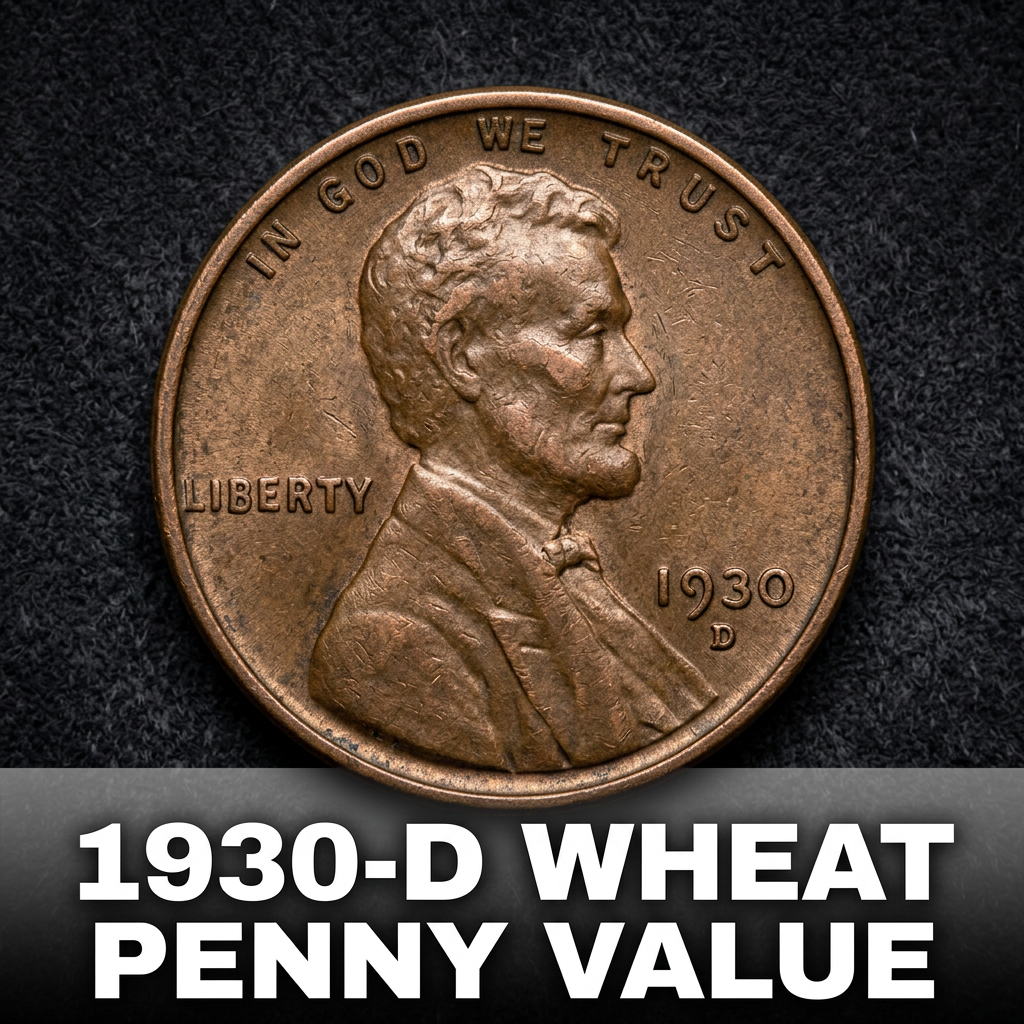
The 1930-D Wheat Penny is worth anywhere from $0.25 in heavily worn condition to well over $100 in top mint state grades. If you’ve dug one of these Denver-minted cents out of an old jar or inherited a coin collection, you’re in the right place to find out exactly what it’s worth.
What Makes the 1930-D Wheat Penny Special
The 1930-D Wheat Penny was struck at the Denver Mint during a period when coin production was beginning to slow down ahead of the Great Depression’s toughest years. The “D” mintmark, located just below the date on the obverse, tells you this coin came from Denver rather than Philadelphia or San Francisco. Denver produced about 40 million of these cents in 1930 — a fairly healthy mintage, which means they’re not considered rare in circulated grades. However, well-preserved examples with strong luster and sharp details can still command impressive prices among collectors. If you’ve got one sitting around and aren’t sure whether it’s the Philadelphia or Denver version, a coin identification app can help you read the mintmark quickly and accurately without any guesswork. Understanding which mint struck your coin is the very first step in figuring out what it’s really worth.
1930-D Wheat Penny Value by Grade
The grade of your coin matters more than almost anything else when it comes to determining value. A heavily circulated 1930-D that has worn smooth might only fetch a few cents above face value, while an uncirculated example graded MS-65 Red can sell for $80 to $150 or more at auction. Here’s a simple breakdown to help you understand where your coin might fall:
| Grade | Description | Estimated Value |
|---|---|---|
| Good (G-4) | Heavy wear, outline visible | $0.25 – $0.50 |
| Fine (F-12) | Moderate wear, major details clear | $0.75 – $1.50 |
| Very Fine (VF-20) | Light wear on high points | $2.00 – $4.00 |
| Extremely Fine (EF-40) | Slight wear, sharp details | $5.00 – $10.00 |
| About Uncirculated (AU-55) | Faint traces of wear only | $12.00 – $22.00 |
| MS-63 Red Brown | Uncirculated, mixed color | $30.00 – $55.00 |
| MS-65 Red | Gem uncirculated, full red | $80.00 – $150.00+ |
For a deeper look at certified auction results and current retail pricing, you can check out 1930-D Wheat Penny price data across multiple grades to see how recent sales compare to these estimates.
How to Tell What Grade Your 1930-D Penny Is
You don’t need to be a professional numismatist to get a rough idea of your coin’s grade. Start by looking at Lincoln’s cheekbone and jaw — these are the highest points on the design and the first places to show wear. If those areas look flat or smooth, your coin is likely in the Good to Fine range. If you can still see hair detail above Lincoln’s ear and his bow tie is clearly defined, you’re probably looking at a Very Fine or better example. Full luster and original reddish-orange color are signs of an uncirculated coin. Color matters a lot in this range — full red (RD) coins are worth significantly more than red-brown (RB) or brown (BN) examples. CoinKnow is a great tool to walk you through the grading process step by step, even if you’ve never graded a coin before. It’s designed for everyday people, not just experts.
What Affects the 1930-D Wheat Penny Value Beyond Grade
Beyond the grade itself, a few other factors can push your coin’s value up or down. Strike quality is one of them — some 1930-D cents were struck with weak dies, resulting in soft or mushy details even on coins that show minimal wear. Strong strikes with bold wheat stalks and crisp letters are more desirable. Eye appeal also plays a big role: original skin, no cleaning, and no spots or discoloration all make collectors more willing to pay a premium. Cleaned coins — those that have been polished or dipped — are worth considerably less than original examples of the same grade. If you want a complete picture of the full value range for 1930 Lincoln pennies including the D and S mint varieties, it’s worth comparing all three issues side by side. The CoinKnow app can also flag red flags like cleaning or damage that would lower your coin’s market value before you try to sell it.
Should You Get Your 1930-D Penny Graded?
Professional grading from services like PCGS or NGC is usually worth it only if your coin appears to be in uncirculated or near-uncirculated condition. Grading fees typically start around $30 to $50 per coin, so submitting a coin worth $2 in circulated condition doesn’t make financial sense. But if your 1930-D Wheat Penny looks bright, original, and free of wear, getting it slabbed could significantly increase buyer confidence and the price you can command. For everyday collectors just getting started, CoinKnow offers an accessible way to research your coins, understand market trends, and decide whether professional grading is a smart investment before you spend the money.
—
Frequently Asked Questions
Q: How do I know if my penny is a 1930-D or a 1930 Philadelphia issue?
A: Look just below the date on the front of the coin. If you see a small “D,” it was made in Denver. No mintmark at all means it came from Philadelphia. The Philadelphia issue had a much higher mintage and is generally worth a similar amount in lower grades.
Q: Is a 1930-D Wheat Penny rare?
A: Not in circulated grades. With about 40 million minted, they’re fairly common in worn condition. However, high-grade examples graded MS-65 Red or better are genuinely scarce and can be worth $100 or more to the right collector.
Q: Can I clean my 1930-D Wheat Penny to make it look better?
A: No — please don’t. Cleaning almost always destroys the original surface of the coin and dramatically reduces its value. Collectors strongly prefer original, uncleaned coins even if they look a little darker or dull. Leave it as-is and let a professional assess it before doing anything to it.