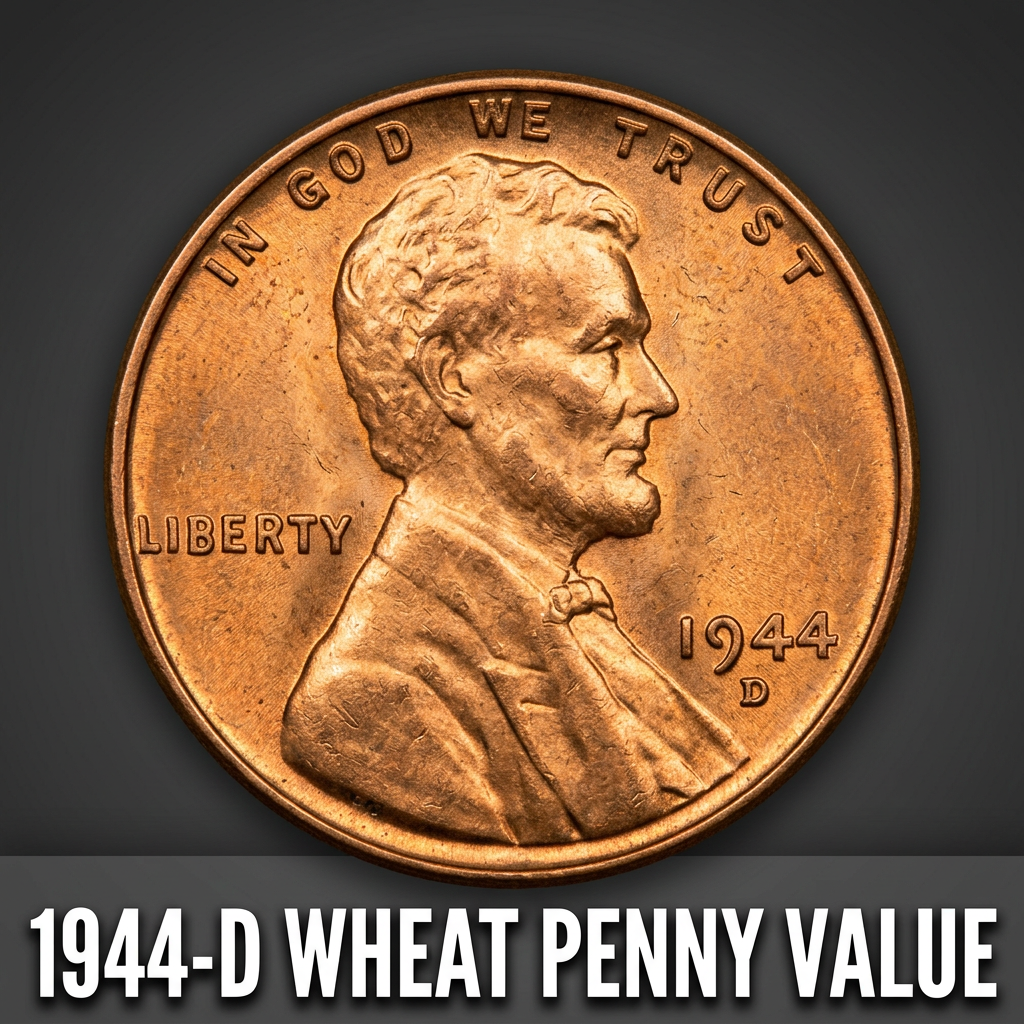
The 1944-D Wheat Penny is worth anywhere from $0.10 in heavily worn condition to over $8 in uncirculated grades, with rare error coins fetching hundreds or even thousands of dollars. If you just found one of these old Lincoln cents, you’re in the right place to learn exactly what it might be worth.
What Is the 1944-D Wheat Penny?
The 1944-D Wheat Penny is a Lincoln Wheat Cent struck at the Denver Mint during World War II. The “D” mintmark sits just below the date on the obverse side of the coin. This was a high-production year — the Denver Mint churned out over 430 million of these cents — which is why most circulated examples aren’t worth a fortune. But that doesn’t mean yours is worthless. Condition, errors, and special varieties can make a big difference in value.
If you’re not sure what coin you’re holding or where the mintmark is, a coin identification app can help you quickly confirm the date, mintmark, and denomination just by snapping a photo. Tools like this make it much easier for everyday collectors to get started without needing years of numismatic experience. Once you confirm you’ve got a 1944-D, the next step is figuring out its grade and whether it has any special features that could bump up its value significantly.
1944-D Wheat Penny Value by Grade
The value of a 1944-D Wheat Penny depends heavily on its condition, or “grade” in collector terms. A coin that’s been circulated and shows heavy wear is worth much less than one that looks nearly brand new. Here’s a general breakdown of what you can expect:
| Grade | Description | Estimated Value |
|---|---|---|
| Good (G-4) | Heavy wear, details visible | $0.10 – $0.25 |
| Fine (F-12) | Moderate wear, lettering clear | $0.25 – $0.50 |
| Extremely Fine (EF-40) | Light wear on high points | $1.00 – $2.00 |
| Uncirculated (MS-63) | No wear, some bag marks | $3.00 – $5.00 |
| Gem Uncirculated (MS-65) | Sharp luster, minimal marks | $6.00 – $8.00+ |
For the most up-to-date pricing across all grades, you can check current 1944-D Wheat Penny prices in MS Red grades to see how the market is trending right now. Prices can shift based on collector demand and auction results, so it’s always good to check a current source before buying or selling.
The Rare 1944-D Steel Penny Error
Here’s where things get really exciting. In 1944, the U.S. Mint switched back to copper after using steel pennies in 1943 due to wartime metal shortages. However, a small number of leftover steel planchets accidentally made their way into the production run. The result? The 1944-D Steel Wheat Penny — one of the most famous and valuable error coins in American numismatics.
A genuine 1944-D Steel Penny can sell for anywhere from $30,000 to over $115,000 depending on its grade and certification. These are extraordinarily rare. If you think you might have one, the simplest test is to hold a magnet near it — a steel cent will stick, while a copper one won’t. That said, many people confuse copper cents that have been plated or artificially altered for genuine steel examples. Always get a suspected error coin authenticated by a professional grading service like PCGS or NGC before drawing any conclusions.
How to Check Your 1944-D Wheat Penny Value
Beyond the rare steel error, most 1944-D Wheat Pennies are common coins, but that doesn’t mean they’re not worth keeping. A well-preserved example with strong luster and red color (designated “RD” by graders) will always attract collector interest. CoinKnow is a great app for learning more about your coins, tracking your collection, and understanding grading terminology in plain language — perfect for beginners and seasoned collectors alike.
To get a full picture of what your 1944-D Wheat Penny is worth, it helps to look at multiple sources. You can read a detailed breakdown of 1944 Wheat Penny value information across all mint marks and conditions to compare how the Denver coin stacks up against Philadelphia and San Francisco examples from the same year. Having multiple reference points will help you make a more informed decision about whether to sell, hold, or have your coin professionally graded.
Tips for Selling Your 1944-D Wheat Penny
If you decide to sell, you have several good options. Online platforms like eBay allow you to reach collectors directly, though you’ll want to photograph your coin clearly and describe its condition accurately. Coin dealers are another option — they offer convenience but typically buy at wholesale prices. For higher-value pieces, especially any potential error coins, a major auction house like Heritage Auctions or Stack’s Bowers may get you the best return.
CoinKnow can also help you research recent sale prices so you know what to expect before you list. Going in informed means you’re much less likely to leave money on the table. Whether your coin is worth a dime or thousands of dollars, knowing its story makes it that much more interesting to own.
FAQ
Q: How do I know if my 1944-D Wheat Penny is made of steel?
A: Use a simple magnet. If the coin sticks, it may be a rare steel planchet error. If it doesn’t stick, it’s a standard copper example. Always have a suspected steel 1944-D authenticated by PCGS or NGC before assuming it’s genuine, since altered coins do exist.
Q: Is the 1944-D Wheat Penny rare?
A: In most circulated conditions, no — the Denver Mint produced over 430 million of them in 1944. However, high-grade examples with full red color and the extremely rare 1944-D Steel error variety are genuinely scarce and command strong premiums among collectors.
Q: Where can I find the most accurate current value for my 1944-D Wheat Penny?
A: Check certified coin price guides, recent eBay completed sales, or dedicated resources like CoinKnow to compare values across different grades. Prices can fluctuate with the market, so using a current source always gives you the most reliable estimate.