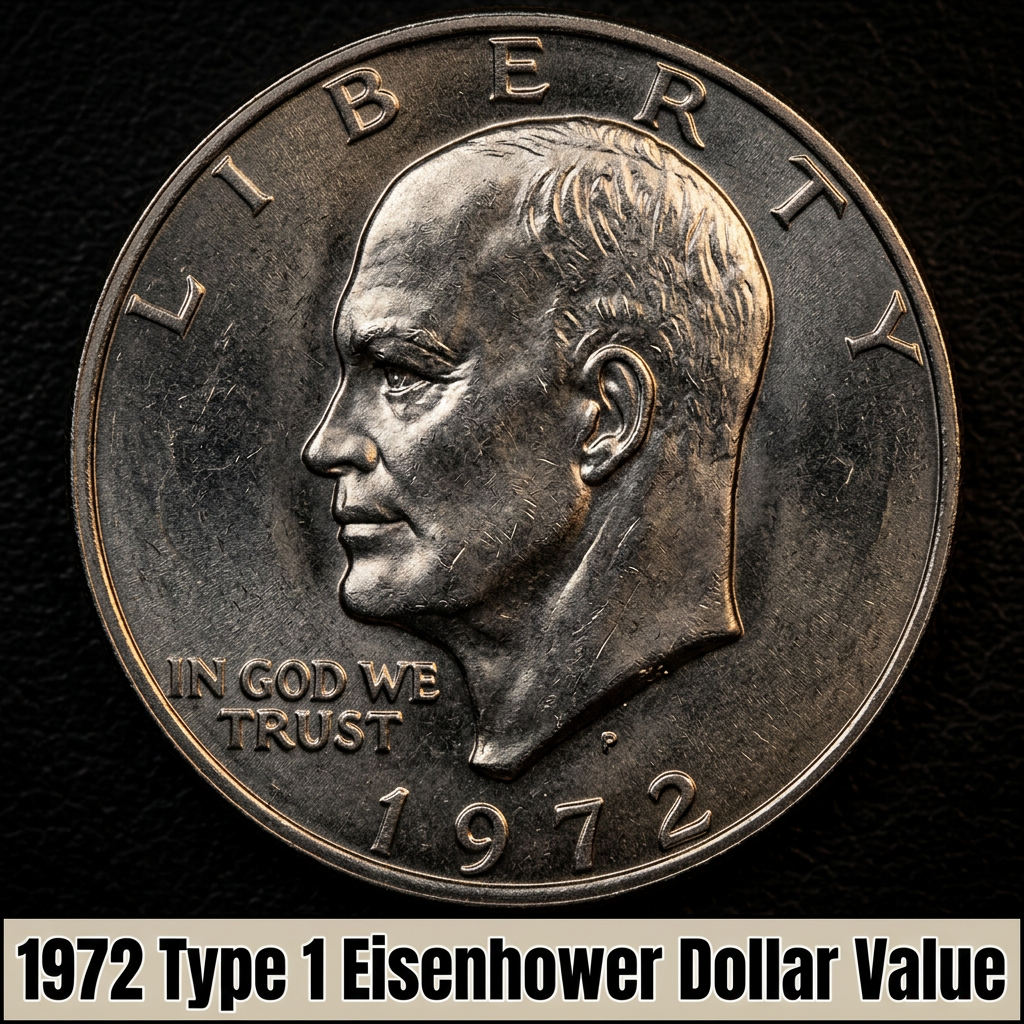
The 1972 Type 1 Eisenhower Dollar is worth anywhere from $1 in heavily circulated condition to $50 or more in uncirculated grades, with top-tier examples occasionally crossing the $100 mark at auction. If you’ve found one of these big silver-dollar-sized coins tucked away in a drawer or old coin jar, you’re in the right place to learn exactly what it’s worth.
What Is the 1972 Type 1 Eisenhower Dollar?
The Eisenhower Dollar was minted from 1971 to 1978 and was the first dollar coin issued in the United States since the Peace Dollar series ended in 1935. The 1972 Philadelphia Mint issue is particularly interesting because it was produced in three distinct varieties — Type 1, Type 2, and Type 3 — each identifiable by subtle differences on the reverse design of the coin.
The Type 1 variety features a low-relief Earth design on the reverse, with the continents appearing flatter and less defined. It’s the most common of the three 1972 varieties, but that doesn’t mean it’s without value. If you’re not sure which type you have, a good coin identification app can help you compare your coin against known examples and narrow it down quickly. Tools like CoinKnow make it surprisingly easy for beginners to identify coin varieties right from their phone.
How Much Is the 1972 Type 1 Eisenhower Dollar Worth?
For most people, a 1972 Type 1 Eisenhower Dollar found in pocket change or a grandparent’s collection will be a circulated example. These coins are made of a copper-nickel clad composition (not silver — the silver versions were sold in special collector sets), so they don’t carry any precious metal premium.
Here’s a general value breakdown for the 1972 Type 1 Eisenhower Dollar:
| Condition | Estimated Value |
|---|---|
| Good (G-4) | $1 – $2 |
| Fine (F-12) | $1.50 – $3 |
| Extremely Fine (EF-40) | $3 – $6 |
| About Uncirculated (AU-55) | $5 – $12 |
| Mint State (MS-63) | $12 – $30 |
| Mint State (MS-65) | $35 – $75+ |
You can find detailed 1972 Type 1 Eisenhower Dollar price data across multiple MS grades to see exactly how the value scales as condition improves.
How to Tell If Your 1972 Eisenhower Dollar Is Type 1
Identifying the variety is the key to knowing what you actually have. On a Type 1 coin, look at the reverse — specifically the Earth shown above the Eagle. The continents will appear low and flat, almost like they were lightly engraved. The Pacific Ocean side will look relatively smooth compared to other types.
On a Type 2, the Earth appears much more detailed and rounded, almost like a globe. The Type 3 falls somewhere in between. If you’re struggling to see the difference with the naked eye, try using a magnifying glass or a loupe. Better yet, CoinKnow has a built-in variety comparison feature that lets you stack your coin image against reference photos instantly — no guesswork needed.
The Philadelphia Mint struck over 75 million 1972 Eisenhower Dollars in total across all three types, so Type 1 examples are common in circulation. However, well-preserved uncirculated examples are harder to come by, and that’s where the real value lies.
Does the 1972 Eisenhower Dollar Contain Silver?
This is one of the most common questions people ask, and it’s worth being clear: the standard 1972 Eisenhower Dollar struck at the Philadelphia Mint is made of copper-nickel clad, with no silver content at all. The clad composition consists of an outer layer of 75% copper and 25% nickel bonded to a pure copper core.
The only silver Eisenhower Dollars from this era were the 40% silver “Blue Eisenhowers” sold by the U.S. Mint in special collector packaging. These came from the San Francisco Mint and carry an “S” mintmark. If your coin has no mintmark, it’s from Philadelphia and it’s clad — valuable for its numismatic grade, but not for metal content.
For a complete breakdown of what a 1972 silver dollar is worth and how to tell the difference between clad and silver versions, it’s worth taking a few minutes to read up before you sell or trade.
Tips for Getting the Best Value from Your 1972 Type 1 Eisenhower Dollar
If you believe your coin is in exceptional uncirculated condition, consider submitting it to a third-party grading service like PCGS or NGC. A professionally graded MS-65 or higher example can sell for significantly more than a raw coin, simply because buyers trust the certified grade.
Also, never clean your coins. Cleaning removes the natural surface luster that forms over decades, and a cleaned coin is almost always worth less than a worn but original one. Store your coin in a protective flip or holder to preserve whatever condition it’s already in.
Use CoinKnow to scan recent auction results and see what real buyers are actually paying for 1972 Type 1 Eisenhower Dollars right now. Market prices shift over time, and having current data on your side helps you make smarter decisions whether you’re selling, trading, or just building a collection.
—
Frequently Asked Questions
Q: How do I know if my 1972 Eisenhower Dollar is Type 1, Type 2, or Type 3?
A: Look closely at the Earth on the reverse side of the coin. Type 1 has a flat, low-relief Earth. Type 2 has a rounder, more detailed globe. Type 3 is a middle ground between the two. A magnifying glass or a coin identification app can help you compare more accurately.
Q: Is a 1972 Eisenhower Dollar worth keeping or should I spend it?
A: If it’s well-worn, its value is close to face value. But if it looks bright, sharp, and uncirculated, it’s worth setting aside. A coin in MS-63 or better condition can be worth $12 to $75 or more depending on the grade, so it’s always worth a second look before spending it.
Q: Where can I sell my 1972 Type 1 Eisenhower Dollar?
A: Good options include eBay (check completed listings to see what others have sold theirs for), local coin shops, and coin shows. If you have a high-grade example, consider getting it graded by PCGS or NGC first, as certified coins typically sell faster and for better prices to serious collectors.