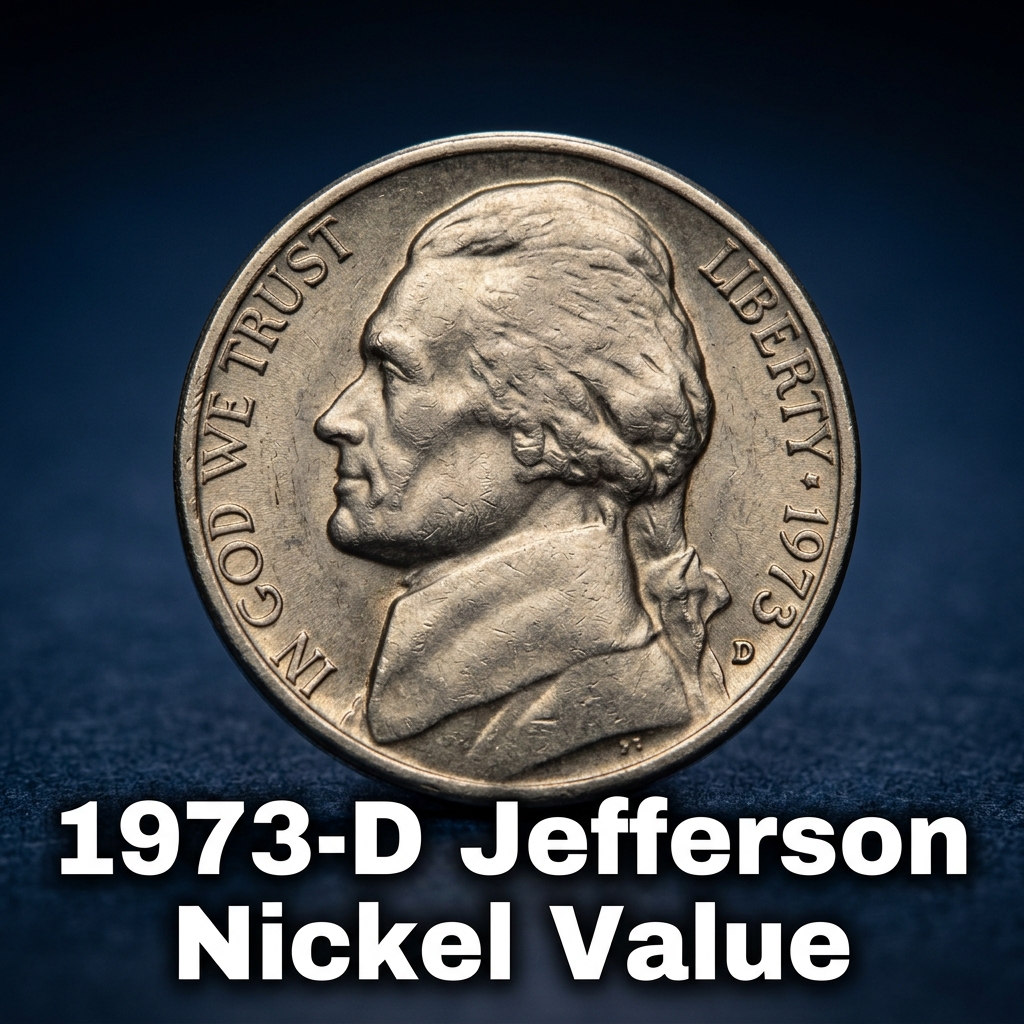
The 1973-D Jefferson Nickel is worth anywhere from $0.10 in heavily circulated condition to $15 or more in pristine mint state, with rare high-grade examples occasionally fetching even higher prices. If you found one of these coins in your pocket change or an old jar, you’ve come to the right place to find out what it’s really worth.
What Is the 1973-D Jefferson Nickel?
The “D” in 1973-D stands for Denver, meaning this coin was struck at the Denver Mint. In 1973, the Denver Mint produced over 261 million Jefferson Nickels — a massive mintage that makes this coin relatively common in most grades. Because so many were made, worn examples from your pocket change are generally worth face value or just a little above it. However, that large mintage doesn’t mean every coin is worthless. High-grade, uncirculated specimens — especially those with sharp details and lustrous surfaces — can still command solid premiums among collectors.
The Jefferson Nickel series has been running since 1938, and the 1973-D is considered a mid-era issue. The obverse features Thomas Jefferson’s portrait designed by Felix Schlag, and the reverse shows Monticello, Jefferson’s famous Virginia home. If you’re trying to identify exactly what you have, a coin identification app can help you confirm the mint mark, date, and overall grade in seconds — making the process much easier than digging through books.
1973-D Jefferson Nickel Value by Grade
Coin values depend heavily on condition, also known as “grade.” A coin that looks like it just rolled off the mint press is worth far more than one that’s been jangling around in a drawer for 50 years. Here’s a quick breakdown of typical 1973-D Jefferson Nickel values:
| Grade | Description | Estimated Value |
|---|---|---|
| Good (G-4) | Heavy wear, outlines visible | $0.10 – $0.25 |
| Fine (F-12) | Moderate wear, some detail | $0.25 – $0.50 |
| Extremely Fine (EF-40) | Light wear on high points | $0.50 – $1.00 |
| MS-63 (Uncirculated) | No wear, some contact marks | $2 – $5 |
| MS-65 (Gem Uncirculated) | Bright luster, minimal marks | $8 – $15 |
| MS-67 and above | Near perfect, exceptional eye appeal | $50+ |
For the most current and detailed 1973-D Jefferson Nickel price data across all mint state grades, it’s always smart to check up-to-date market resources, since collector demand can shift over time.
How to Grade Your 1973-D Jefferson Nickel at Home
You don’t need to be a professional numismatist to get a rough idea of your coin’s grade. Start by looking at the high points of the design — Jefferson’s cheekbone and hair above his ear, and the steps of Monticello on the reverse. If those areas show visible wear or smoothing, the coin is circulated. If the original mint luster (that faint, cartwheel-like sheen) is still visible under a good light, you likely have an uncirculated example.
One of the most important things collectors look for on Jefferson Nickels is the “Full Steps” designation. If the steps on Monticello show five or six complete, uninterrupted horizontal lines, the coin may qualify for a Full Steps (FS) designation from a grading service like PCGS or NGC — and that can dramatically increase its value. A 1973-D MS-65 Full Steps coin is worth significantly more than a standard MS-65.
CoinKnow is a handy app that many collectors use to quickly assess coin grades and values right from their phone. If you’re not sure whether your coin qualifies as Full Steps, CoinKnow can walk you through the key features to examine.
Where to Sell a 1973-D Jefferson Nickel
Most circulated 1973-D Jefferson Nickels won’t fetch much beyond face value at a coin shop, but don’t let that discourage you. If you have a roll or a bag of them in high grades, the value adds up quickly. Online marketplaces like eBay are popular for selling individual high-grade coins, while coin shows and local dealers are great for selling larger collections.
Before you sell, do your homework. Checking recent auction results gives you a realistic sense of what buyers are actually paying — not just what sellers are asking. You can review a complete breakdown of 1973 Jefferson Nickel values including the Denver Mint issue to make sure you’re pricing your coin fairly. And if you want to track multiple coins at once, CoinKnow lets you build a digital inventory so you always know what your collection is worth.
Frequently Asked Questions
Q: Is a 1973-D Jefferson Nickel rare?
A: No, the 1973-D is not a rare coin. With over 261 million minted, it’s one of the more common dates in the Jefferson Nickel series. That said, high-grade examples — especially those with Full Steps on Monticello — are much scarcer and worth more to collectors.
Q: What does the “D” mint mark mean on a 1973 nickel?
A: The “D” stands for Denver. You’ll find the mint mark on the obverse (heads side) of the coin, just to the right of Jefferson’s portrait. Coins without a mint mark were struck in Philadelphia, and 1973 proof coins came from San Francisco (marked with an “S”).
Q: How can I tell if my 1973-D nickel is worth more than face value?
A: Check the coin’s condition first. If it has no signs of wear and still shows original mint luster, it may grade as uncirculated and be worth $2–$15 or more. Also examine the steps on Monticello — full, sharp steps add significant value. Using a coin identification and grading app like CoinKnow can make this process much faster and more accurate.