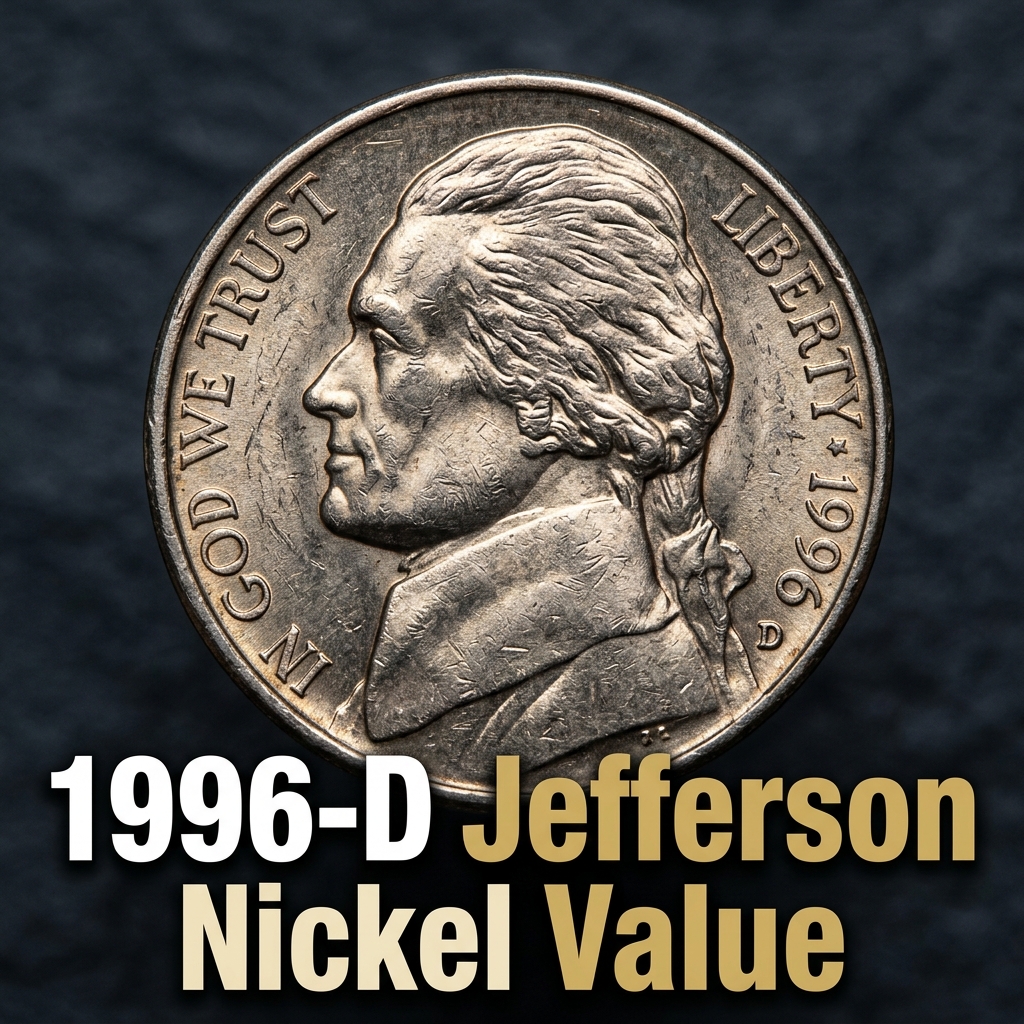
The 1996-D Jefferson Nickel is worth anywhere from 5 cents in heavily circulated condition to around $10 or more in pristine mint state grades — and a few exceptional examples have sold for even higher at auction. If you found one in a coin jar or old wallet, you’re in the right place to find out exactly what it’s worth.
What Is the 1996-D Jefferson Nickel?
The “D” in 1996-D stands for the Denver Mint, one of two facilities that struck Jefferson Nickels that year (the other being Philadelphia). The Denver Mint produced over 401 million of these coins in 1996, making it a relatively common date in the Jefferson Nickel series. The coin features Thomas Jefferson on the obverse and Monticello on the reverse — a classic design that’s been in use since 1938. Even though this coin isn’t rare, condition matters enormously when it comes to value. A worn, scratched example is barely worth face value, while one that has never been used and still has its original luster can be a nice little find. If you’re not sure whether what you’re holding is the real thing or want to identify other coins in your collection, a coin identification app can make the process fast and surprisingly fun. Whether you’re a casual collector or just curious, knowing what you have is always the first step.
1996-D Jefferson Nickel Value by Grade
The value of any coin depends heavily on its grade — essentially, how well-preserved it is. For the 1996-D Jefferson Nickel, here’s a general breakdown of what you can expect:
| Grade | Description | Estimated Value |
|---|---|---|
| Good (G-4) | Heavy wear, major details visible | Face value (5¢) |
| Fine (F-12) | Moderate wear, all lettering clear | $0.10 – $0.25 |
| Extremely Fine (EF-40) | Light wear on high points | $0.25 – $0.75 |
| Mint State (MS-63) | Uncirculated with minor marks | $1 – $3 |
| Gem Mint State (MS-65) | Bright luster, minimal blemishes | $5 – $10+ |
| Superb Gem (MS-67+) | Nearly perfect, exceptional strike | $50 – $200+ |
For up-to-date auction results and real-time pricing, you can check current 1996 Jefferson Nickel price data across mint state grades to see how similar coins have sold recently.
Are Any 1996-D Jefferson Nickels Worth More Than Usual?
While the 1996-D Jefferson Nickel is a common coin, there are always exceptions that command premium prices. The most important factor is the Full Steps designation. On the reverse side of the nickel, Monticello’s steps should show five or six complete, uninterrupted steps. Coins that earn a “Full Steps” (FS) designation from professional grading services like PCGS or NGC are significantly rarer and more valuable. A 1996-D Jefferson Nickel graded MS-65 Full Steps can fetch $30 to $50 or more, and in MS-66 FS, values can climb even higher. Errors and varieties can also boost value. Look for doubling on the date or lettering, off-center strikes, or other striking anomalies. These are uncommon but worth examining with a magnifying glass. CoinKnow is a great resource if you want a quick visual comparison — the app gives you detailed reference images so you can spot if your coin has anything unusual going on.
How to Tell If Your 1996-D Nickel Is Uncirculated
One of the most common questions everyday people ask is: “How do I know if my coin is uncirculated?” The good news is it’s pretty simple once you know what to look for. Tilt the coin under a single light source. An uncirculated coin will show an unbroken, cartwheel-like luster that flows across the entire surface. If the coin shows flat, dull spots on the highest points — like Jefferson’s cheekbones or the roof of Monticello — those are signs of wear from circulation. Also look at the coin’s overall surface for contact marks, which are small nicks from coins bumping against each other in a bag or roll. Even uncirculated coins can have contact marks, but fewer marks mean higher grades and higher value. For a more detailed breakdown of how condition affects price, this guide to 1996 nickel value across different grades and conditions walks you through the specifics in plain language.
Should You Get Your 1996-D Nickel Graded?
Professional coin grading by PCGS or NGC involves a fee — typically $20 to $50 per coin depending on the service tier. For a common date like the 1996-D Jefferson Nickel, it usually doesn’t make financial sense to get it graded unless you believe you have a gem example in MS-66 or higher, or a Full Steps coin. If you’re not sure where your coin stands, use CoinKnow to compare your coin against verified reference images and get a rough idea of its grade before spending money on professional grading. That way, you only submit coins that are realistically worth the investment. As a general rule, if the coin grades below MS-65, the grading fee will likely cost more than the coin is worth on the open market.
Frequently Asked Questions
Q: How much is a 1996-D Jefferson Nickel worth today?
A: Most 1996-D Jefferson Nickels in circulated condition are worth only face value — 5 cents. In uncirculated condition (MS-63), expect around $1 to $3. Gem examples (MS-65 and above) can be worth $5 to $10 or more, and top-grade or Full Steps coins can sell for $50 to $200+.
Q: What does the “D” mint mark mean on a 1996 nickel?
A: The “D” stands for the Denver Mint. You’ll find the mint mark on the obverse (front) of the coin, to the right of Monticello. Denver produced over 401 million Jefferson Nickels in 1996, which is why this coin is quite common in collections and circulation.
Q: Is a 1996-D nickel with Full Steps worth more?
A: Yes, significantly. A 1996-D Jefferson Nickel with a Full Steps designation from PCGS or NGC is much rarer than a standard uncirculated example. In MS-65 FS, the coin can be worth $30 to $50. In higher grades, values can exceed $100. CoinKnow can help you identify whether your coin’s reverse steps look sharp enough to potentially qualify for this designation.